
The $140 Million Timeshare Exit Scam: What the Square One Group and Consumer Law Protection Case Teaches Every Timeshare Owner
The $140 Million Timeshare Exit Scam: What the Square One Group and Consumer Law Protection Case Teaches Every Timeshare Owner
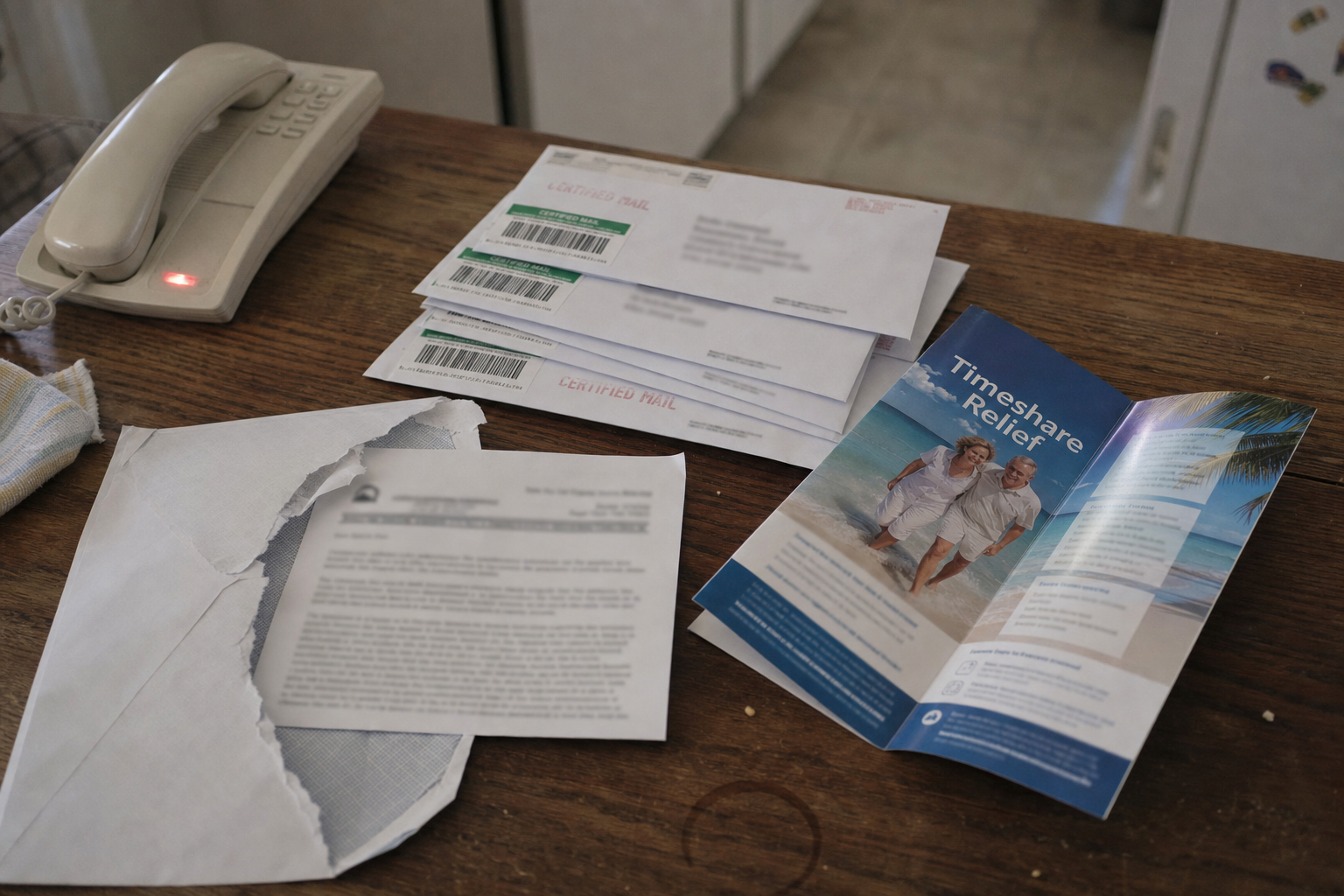
Quick answer: On April 1, 2026, a federal court ordered Christopher Lee Carroll — who ran the timeshare exit scheme operating as Square One Group, Consumer Law Protection, Premier Reservations Group, Resort Transfer Group, and Timeshare Help Source — to pay over $140 million after finding he defrauded more than 11,000 timeshare owners, many of them elderly, out of $5,000 to over $80,000 each for exit services that were often never delivered. If you've ever wondered "is timeshare exit legit," this case is the clearest possible answer: some companies genuinely aren't, and the pattern that exposed this one is worth knowing before you sign anything.
What Happened: The $140 Million Judgment Against Christopher Carroll
The U.S. District Court for the Eastern District of Missouri granted summary judgment to the Department of Justice, the Federal Trade Commission, and the State of Wisconsin against Carroll, finding he was the "mastermind" of an unlawful timeshare exit services scheme. The court ordered him to pay over $95 million in consumer redress and more than $45 million in civil monetary penalties, and permanently banned him from marketing timeshare exit services or engaging in deceptive door-to-door sales of any kind. Carroll was the final remaining defendant in a case that had already resulted in permanent injunctions against 17 co-defendants, including several interrelated corporate entities.
How the Square One Group Scheme Actually Worked
According to the court's findings, Carroll and his co-defendants used direct mail campaigns and high-pressure, in-person sales presentations to convince timeshare owners they urgently needed to pay for an exit. Consumers paid between $5,000 and more than $80,000 to businesses including Square One Group LLC and Consumer Law Protection LLC for a purported release from their timeshare contracts — and in many cases, that service simply wasn't provided.
The scheme violated the FTC Act's prohibition on unfair and deceptive practices, the federal Cooling-Off Rule requiring a three-business-day right to cancel purchases made outside a seller's regular place of business, and Wisconsin's state fraud and direct marketing laws. Consumers who complained were often denied refunds — and separately, Alaska's Attorney General had flagged the same network of companies back in 2022, meaning regulators in multiple states had already identified the pattern years before this judgment.
Why This Case Answers "Is Timeshare Exit Legit?"
The honest answer is that the industry contains both — real, structured exit paths and outright scams — and the difference usually comes down to a few specific, checkable things. A legitimate company explains your options clearly before you pay anything, doesn't pressure you into a same-day decision, and doesn't disappear when you ask questions. The companies in this case did the opposite on every count: false urgency, no disclosure of your legal right to cancel, and silence or denial when consumers pushed back. That's not a gray area — it's the textbook pattern regulators use to identify fraud.
The Red Flags That Were There the Whole Time
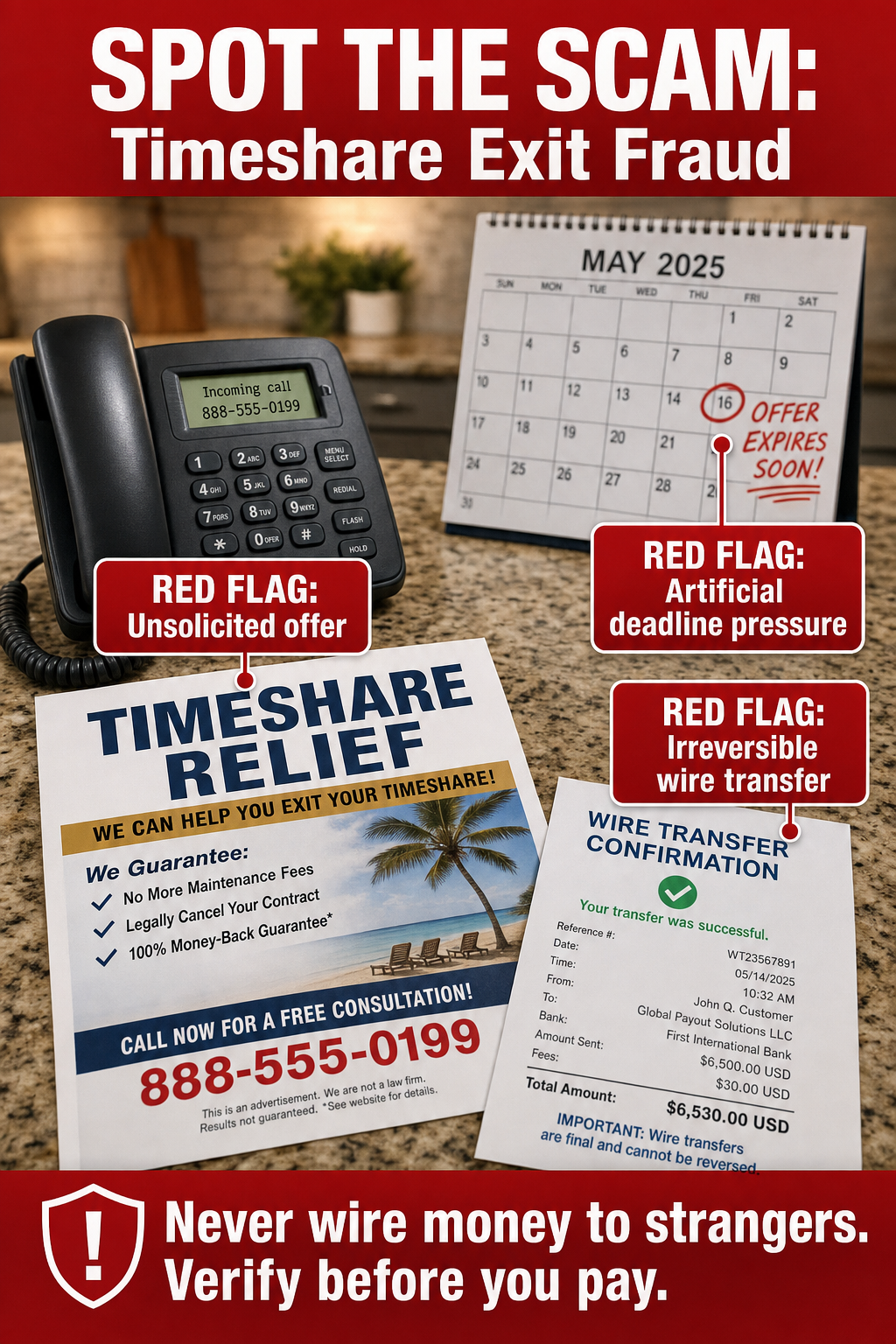
Looking back at how this scheme operated, several warning signs were present from the start, and they apply just as much to any company you're evaluating today:
- In-person pressure tactics designed to get a decision before you've had time to think it over
- No mention of your legal right to cancel within a set window — a company that skips this is either uninformed or hoping you don't know
- Large upfront fees demanded before any actual work has been shown to happen
- Operating under multiple business names — Square One Group, Consumer Law Protection, Premier Reservations Group, Resort Transfer Group, and Timeshare Help Source were all the same underlying operation
- Silence or stonewalling when a customer asks for a status update or a refund
How to Tell a Legitimate Timeshare Exit Company From a Scam
A few concrete things to check before you pay anyone: ask how the company gets paid and when — legitimate firms are transparent about fee structure and timing, not evasive. Ask for a written agreement outlining the specific scope of work before any money changes hands. Search the company's name alongside terms like "complaint" or "lawsuit" before signing anything. And be genuinely skeptical of any company that says you must decide today, or that a resort's own deed-back program isn't a real option — we cover how those programs actually work, and who qualifies, in our guide to timeshare deed-back programs.
What to Do If You Already Paid a Company Like This
If you've paid an upfront fee to a company that never delivered, you're not alone, and there are still steps worth taking. Document everything — contracts, payment records, and any communication. File a complaint with the FTC at ReportFraud.ftc.gov and with your state Attorney General's consumer protection office.
If the company is still operating, a chargeback through your credit card issuer may still be possible depending on how long ago you paid. Our guide to spotting a fake timeshare compensation scam covers a related pattern — scammers who specifically target people who've already been victimized once, offering to "recover" money for another upfront fee.
FAQ
Is timeshare exit legit, or is it always a scam?
Both legitimate exit paths and outright scams exist in this industry. The Square One Group case shows the clear markers of a scam: false urgency, undisclosed cancellation rights, large upfront fees, and no real service delivered. Legitimate companies operate transparently and explain your options before you pay.
Who was Christopher Carroll, and what did he do?
Carroll was the president and CEO of Square One Group, one of several business names used to run a nationwide timeshare exit scheme that defrauded over 11,000 consumers. A federal court found him personally liable for $140 million.
What is the federal Cooling-Off Rule, and why does it matter here?
It's a federal rule requiring that consumers be given three business days to cancel certain purchases made outside a seller's regular place of business, without penalty. The Square One Group scheme was found to have violated this rule by not informing consumers of that right.
How do I check if a timeshare exit company is legitimate before I pay them?
Search the company name alongside "complaint" or "lawsuit," ask for a written agreement detailing the scope of work, and be wary of any company demanding a large upfront fee or pressuring you to decide immediately.
What should I do if I already paid a fraudulent timeshare exit company?
Document everything you have, file a complaint with the FTC and your state Attorney General, and check whether a credit card chargeback is still possible depending on your payment timeline.
Not sure if a timeshare exit offer is legitimate, or ready to explore real exit options?
Get a free, no-pressure consultation with Marcus Reed.
Call (949) 731-6607 or visit axemytimeshare.com.





FBI Warns: Cartel-Linked Timeshare Exit Scams Have Stolen Nearly $300 Million From Owners Since 2019