FBI Warns: Cartel-Linked Timeshare Exit Scams Have Stolen Nearly $300 Million From Owners Since 2019
FBI Warns: Cartel-Linked Timeshare Exit Scams Have Stolen Nearly $300 Million From Owners Since 2019
Quick answer: Federal and Florida authorities have issued renewed warnings about sophisticated timeshare exit and resale scams, some of which have been linked to Mexico-based transnational criminal organizations, including the Jalisco New Generation Cartel. Between 2019 and 2023, roughly 6,000 U.S. victims reported losing nearly $300 million combined. The scammers pose as brokers, attorneys, title companies, or buyers, collect upfront fees, then disappear — and many victims are later targeted a second time by a fake "recovery" operation promising to get their money back for yet another fee.
What Are the FBI and Florida Authorities Actually Warning About?
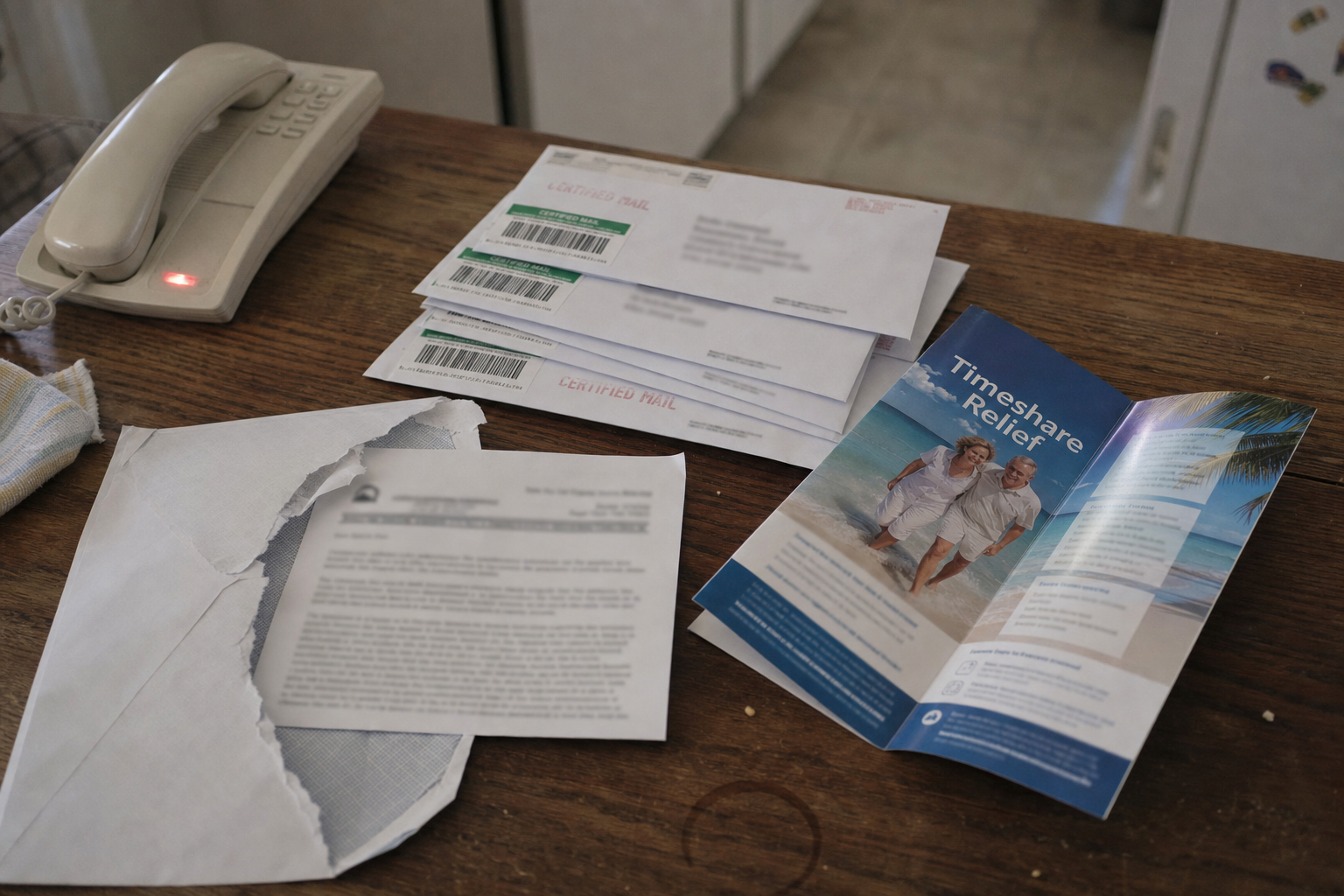
The FBI and the Financial Crimes Enforcement Network (FinCEN) have issued repeated alerts describing a pattern of increasingly polished fraud targeting timeshare owners who want out of their contracts or relief from rising maintenance fees. According to these warnings, operators pose as legitimate resale brokers, attorneys, title companies, or eager buyers, persuading owners to pay "processing," escrow, tax, or closing fees before any transaction happens. Once payment clears, contact stops — and the owner is left still holding the original timeshare and its ongoing fees, now with additional money lost on top of it.
The Two-Stage Scam: How Does It Actually Work?
Authorities describe a pattern that typically unfolds in two distinct phases. First, an unsolicited call or email arrives claiming a buyer is ready or that the owner's timeshare can be exited quickly, using high-pressure tactics to create urgency around an upfront payment. Once that payment is made, the promised sale or cancellation never materializes, and the contact disappears. Later, a second contact often follows — someone posing as a lawyer or recovery specialist claiming they can get the lost money back, but only after the owner pays additional "legal" or "court" fees. In some cases, the follow-up scammers impersonate government officials and threaten legal consequences if more money isn't sent immediately. Fake contracts, letterhead, and websites are used to make both stages look legitimate.
Why Is a Cartel Running Timeshare Scams?
It's a genuinely striking detail in this story: authorities have linked a meaningful share of these operations, particularly those involving timeshares in Mexico, to transnational criminal organizations, including the Jalisco New Generation Cartel (CJNG). For an organization typically associated with drug trafficking, timeshare fraud represents a comparatively low-risk, high-volume revenue stream — targeting retirees and older owners specifically, using stolen or purchased lists of real timeshare ownership records to make pitches feel personalized and credible.
What Red Flags Do Law Enforcement Want Every Owner to Know?
A few specific warning signs show up consistently across these cases, and they're worth memorizing regardless of where you own:
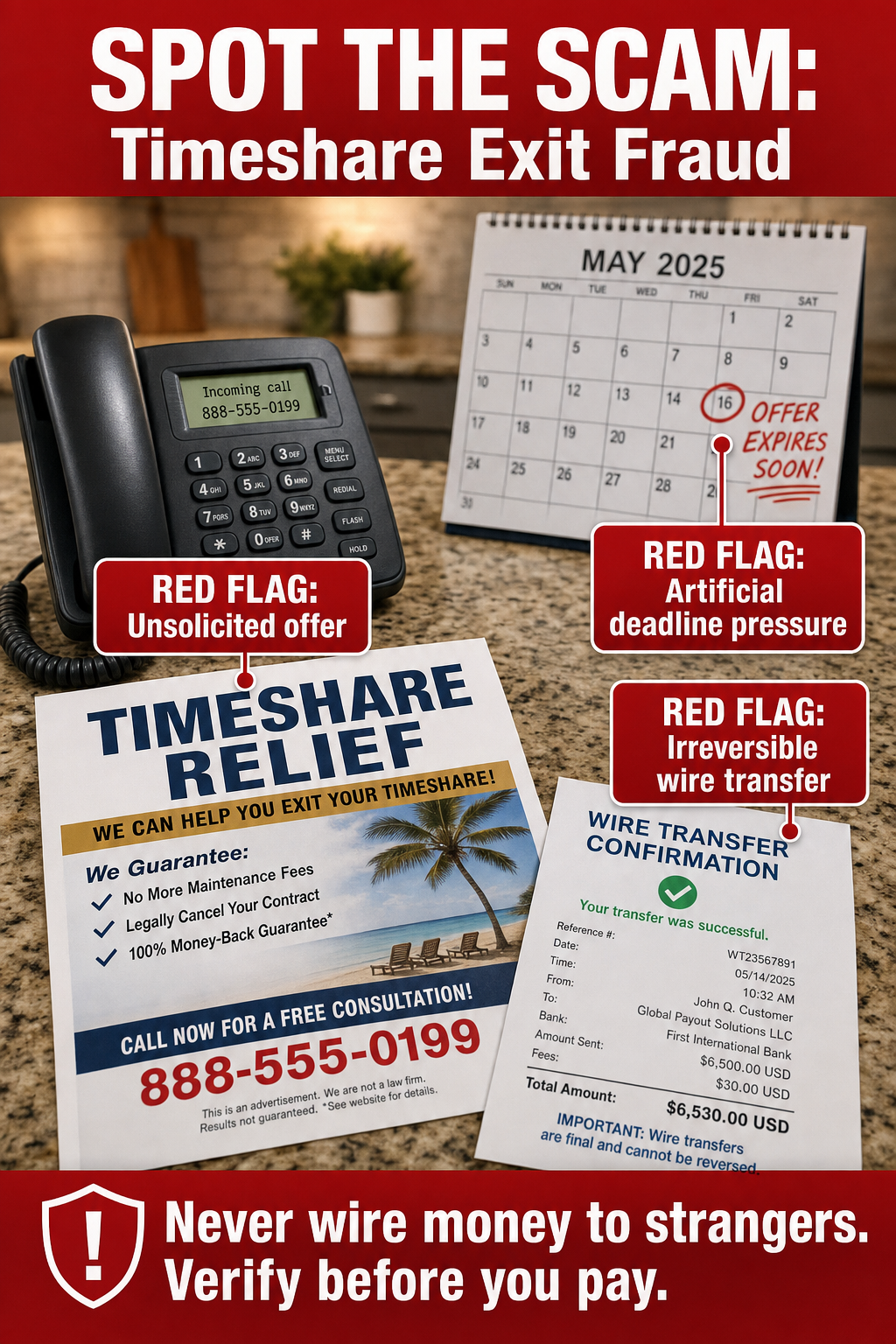
- Any upfront fee requested before a sale or cancellation actually happens. Legitimate resale brokers earn a commission after a sale closes, not before.
- An unsolicited offer that sounds too easy. Timeshares are notoriously difficult to sell on the open market — no honest broker can guarantee a buyer without real marketing effort behind it.
- Pressure to decide immediately. If a caller insists you must act today, that urgency is itself a warning sign.
- A request to sign or email a power of attorney. The FBI specifically warns against signing this kind of document based solely on an email request.
- A second company or "official" demanding payment to recover money you already lost. This is almost always a follow-on scam targeting the same victim twice.
Why Is "No Upfront Fees" the One Rule That Matters Most?
If there's a single rule to remember from all of this, it's the one the FTC repeats most consistently: legitimate commissions and closing costs come out of the final sale price or get paid after services are actually completed — never demanded upfront before anything has happened. This single distinction is the fastest, most reliable way to separate a real offer from a scam, regardless of how professional the paperwork, the website, or the caller's script sounds.
How Do You Verify a Timeshare Exit Company Is Actually Legitimate?
Before paying anyone or signing anything, ask directly: what exact service is being provided, and when? Is there an upfront fee, and if so, why? Who is the buyer, and can that person be independently verified? Can you review the written agreement without pressure to sign immediately? What happens if no sale or cancellation is completed, and is there a written refund policy? A legitimate company will answer every one of these questions clearly and in writing, without pushing you to decide on the spot.
What Should You Do If You've Already Paid a Scammer?
Report it as quickly as possible — the sooner a report is filed after a wire transfer, the better the odds of recovering some funds. File a complaint with the FBI's Internet Crime Complaint Center at ic3.gov, with the Federal Trade Commission at ReportFraud.ftc.gov, and with your state's Attorney General's consumer protection office. Include every bank detail, phone number, email address, and document the scammers sent you. And critically, be on guard for the follow-up "recovery" scam — a legitimate law enforcement or government agency will never ask you to pay a fee to get your stolen money back.
FAQ
Are all timeshare exit companies scams?
No, but the industry has a real fraud problem, and telling legitimate companies apart from scams matters. The clearest test is upfront fees: legitimate providers are paid after work is completed or a sale closes, not before.
Why are cartels involved in timeshare scams?
Authorities have linked a portion of these schemes, particularly those tied to Mexican timeshare properties, to transnational criminal organizations including the Jalisco New Generation Cartel, which use timeshare fraud as a comparatively low-risk revenue stream targeting older owners.
What is the "recovery scam" that follows the original fraud?
It's a second wave of fraud in which a new contact, posing as a lawyer or recovery specialist, offers to recover money already lost to the original scam, but only after the victim pays another upfront fee. It's almost always fraudulent.
How much money have timeshare exit scams stolen?
Between 2019 and 2023, roughly 6,000 U.S. victims reported nearly $300 million in combined losses to these schemes, according to federal authorities.
What should I do if a company asks for payment before selling or canceling my timeshare?
Treat it as a serious red flag. Legitimate resale and exit services are typically paid after the transaction is completed, not before. Verify the company independently and don't provide payment based solely on what a caller tells you.
Not sure if a timeshare exit offer is legitimate? Get a free, no-pressure consultation with Marcus Reed before you pay anyone.
Call (949) 731-6607 or visit axemytimeshare.com.