The $1,480 Fee That Turns Into $70,000: Why Maintenance Fees, Not the Purchase Price, Are What Actually Breaks a Timeshare Budget
The $1,480 Fee That Turns Into $70,000: Why Maintenance Fees, Not the Purchase Price, Are What Actually Breaks a Timeshare Budget

Most people signing timeshare paperwork scrutinize one number: the purchase price. A recent 24/7 Wall St analysis, picked up by AOL, walked through why that's exactly backwards — the number that actually determines whether a timeshare becomes a decades-long financial mistake is the recurring maintenance fee, and it's the one number sales presentations spend the least time on.
The example in the piece is a couple in their early 60s who tour a resort, buy a week they plan to use every summer, and walk away with a $1,480 annual maintenance fee. On paper, that looks manageable. Run the math forward across a realistic ownership span, and it stops looking manageable at all.
Why a Small Annual Number Becomes a Massive One
Maintenance fees don't sit still. They've historically climbed 4% to 5% a year across the industry — well ahead of general inflation — because they cover the resort's property taxes, insurance, staffing, and refurbishment reserves, all of which get more expensive over time. Paid flat with no increases at all over 25 years, that $1,480 fee would total $37,000. That version doesn't exist in the real world, because timeshare associations vote fee increases almost every year. At a 4% annual escalation, the real total climbs to roughly $61,600. At 5% — closer to what many owners actually experience — it reaches nearly $70,600 before the couple even hits their late 80s.
And that math doesn't include the extras. Special assessments for storm damage, roof replacement, or resort renovations routinely add unplanned four-figure hits on top of the base fee, none of which show up in any brochure's projected cost.
The Money You're Not Seeing Work Elsewhere
There's a second cost buried in this that's easy to miss entirely: opportunity cost. Every dollar that goes toward an escalating maintenance fee is a dollar that isn't sitting in a CD, a brokerage account, or anywhere else actually earning something. For context, the average American household's entire annual spending across every category was around $78,500 in 2024 — meaning a single vacation fee, left to compound for 25 years, can represent a genuinely significant slice of a retiree's fixed budget, not a rounding error.
This pattern shows up across the industry broadly — a Marriott Vacation Club week, a Wyndham Destinations contract, a Hilton Grand Vacations membership, or a smaller independent resort can all carry the same structural problem: a fee that escalates faster than a fixed income does.
What Actual Consumer Advocates Recommend
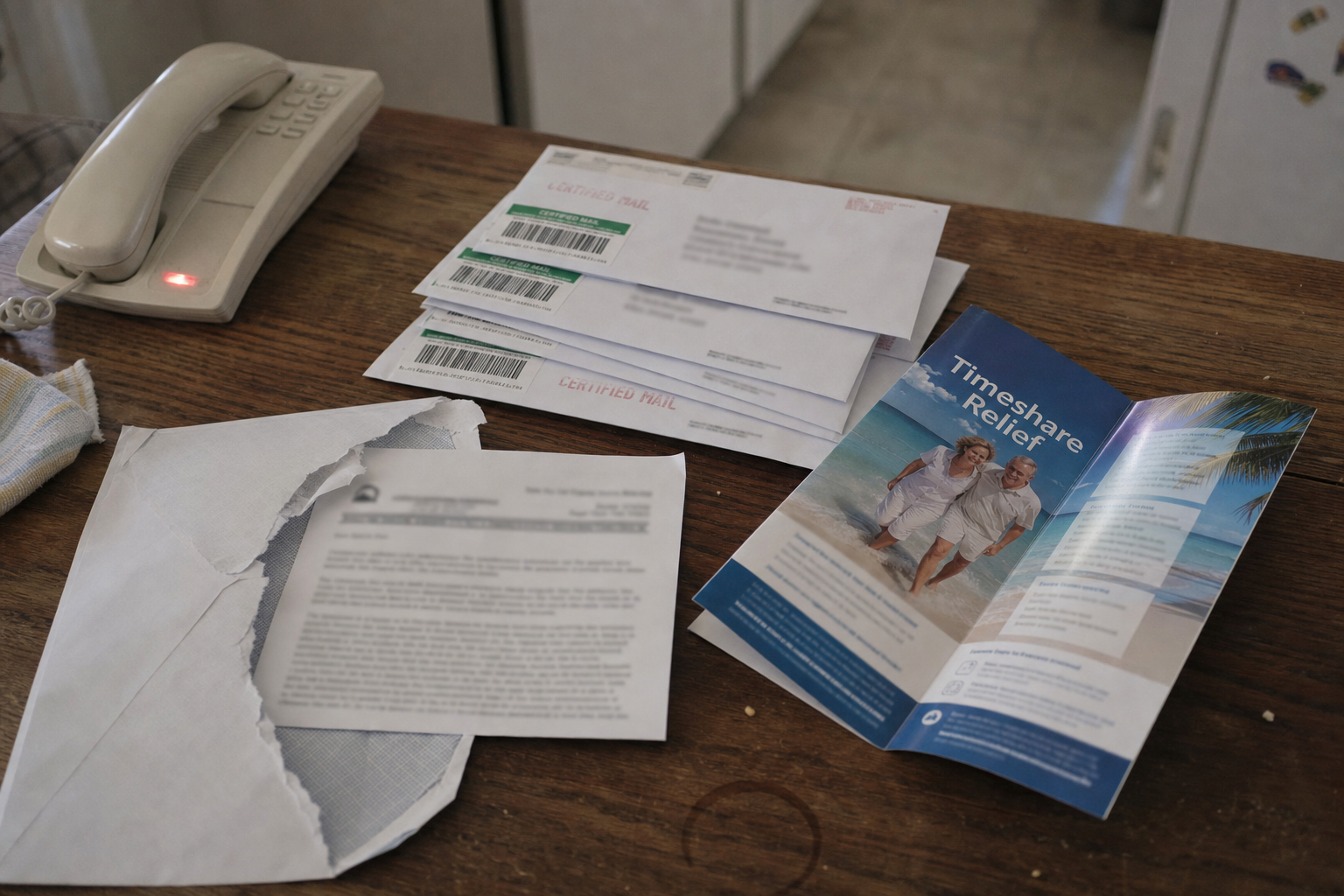
This is where the article gets directly relevant to anyone already stuck in a contract like this. Nationally syndicated consumer finance host Clark Howard, who's fielded calls about exactly this situation for years, has been consistently blunt about one thing: paying a large fee upfront to a company promising to get you out of a timeshare carries real risk of paying that money and getting nothing in return. His recommended alternatives instead are working through the resort's own deed-back program when one is offered, or connecting with legitimate owner networks like the Timeshare Users Group to find someone willing to take over the contract directly.
That's a message worth taking seriously regardless of who's saying it — and it happens to be exactly the same warning we give people who call us after already losing money to a company that took payment upfront and delivered nothing.
The Actual Test Worth Running Before You Decide Anything
The article lays out a genuinely useful gut-check: compare what you're actually paying — the escalating fee, plus any special assessments, plus what that money could otherwise be earning — against what it would cost to simply book the same week at a comparable hotel or rental, in cash, at full price. If you wouldn't pay that much to vacation there without owning anything, the timeshare isn't saving you money. It's just subsidizing a habit you wouldn't otherwise choose to buy.
If you've already run that math and don't like the answer, the honest path out matters more than the fastest-sounding one. We don't ask for large upfront payments before doing anything, for exactly the reason Clark Howard warns about — that structure is where people get hurt twice, first by the timeshare and then by the company that promised to get them out of it.
Already know the maintenance fee math doesn't work for you anymore?
Let's talk about what a legitimate exit actually looks like for your specific contract.
Call Axe My Timeshare today.



FBI Warns: Cartel-Linked Timeshare Exit Scams Have Stolen Nearly $300 Million From Owners Since 2019