The Cartel Timeshare Scam Targeting American Owners — And Why It's Escalated Into 2026
The Cartel Timeshare Scam Targeting American Owners — And Why It's Escalated Into 2026
If you've been contacted out of the blue by someone offering to buy your Mexican timeshare at a price that sounds too good to pass up, there's a real chance you're being targeted by one of the most sophisticated organized fraud networks operating against American consumers today — and U.S. and Mexican authorities have spent the past several years working to dismantle it.
How Did a Cartel End Up Running a Timeshare Fraud Operation?
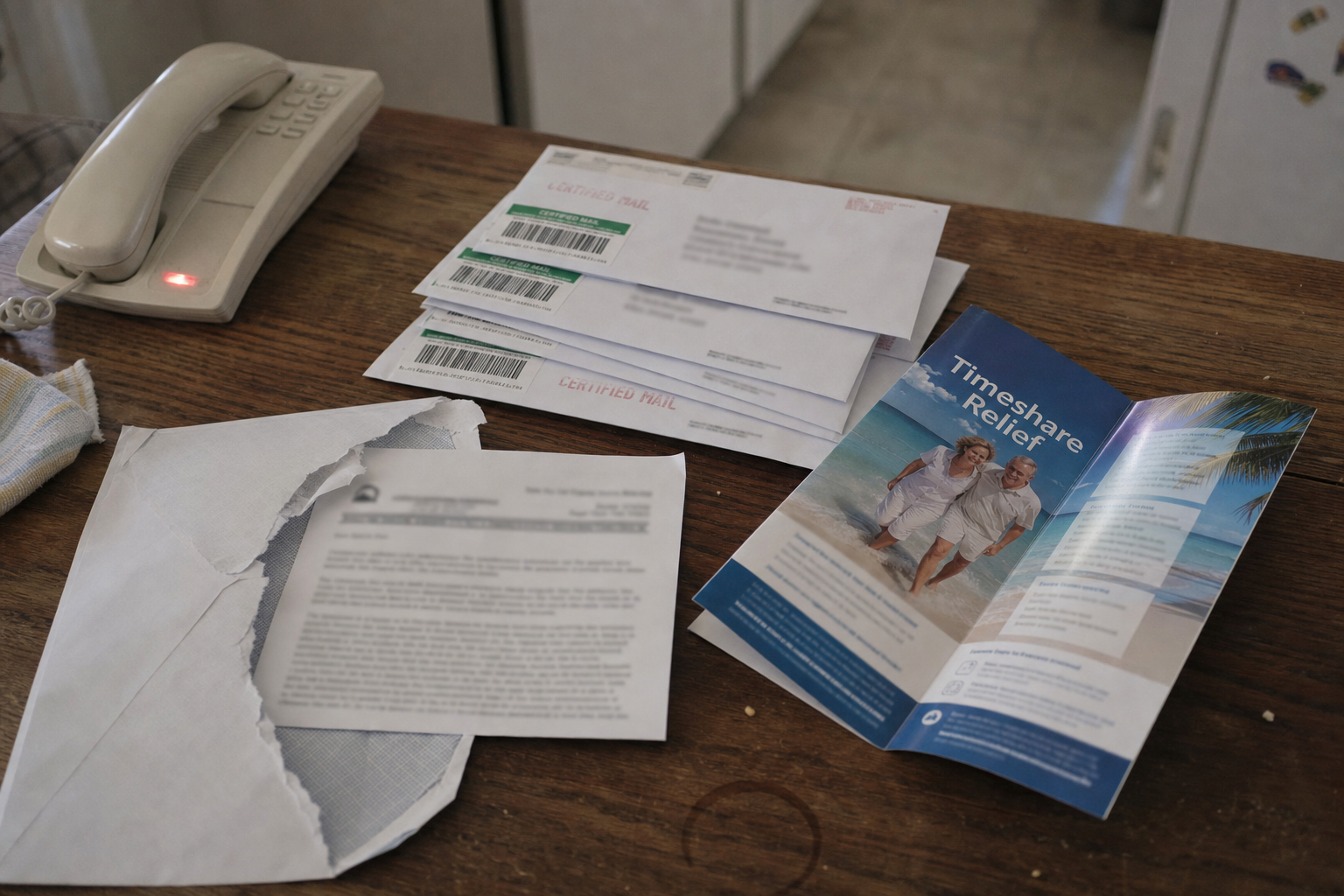
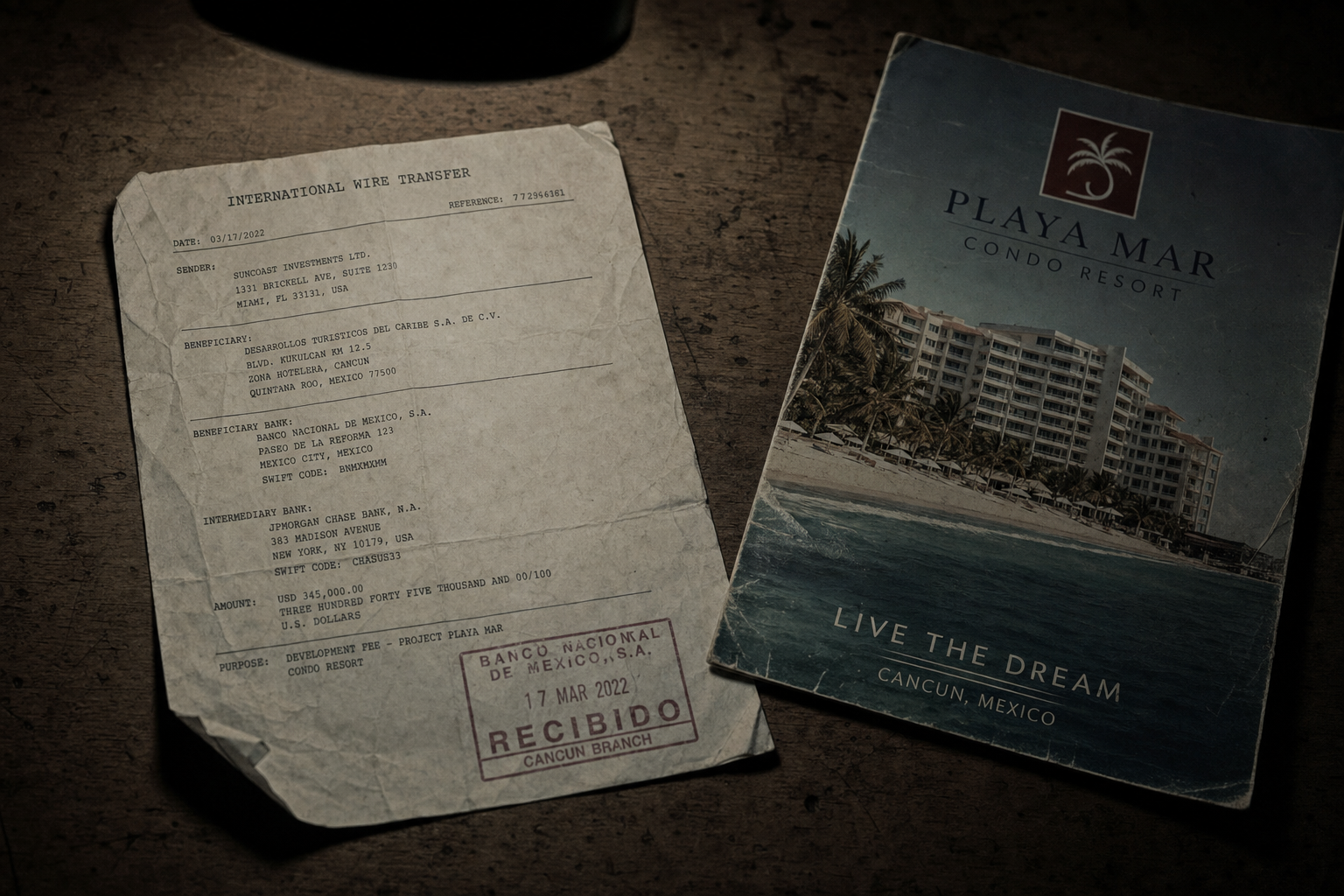
The Cartel de Jalisco Nueva Generación (CJNG), one of Mexico's most notorious and violent organized crime groups, built an extensive network of English-speaking call centers — initially rooted in Puerto Vallarta and later expanding to destinations like Cancún and Acapulco — specifically to target U.S. timeshare owners. The scheme reportedly involved deceptive sales and resale tactics designed to induce victims to pay fees connected to purported rental or resale opportunities, with victims often contacted through cartel-run call centers that brokers or intermediaries had used to locate buyers or renters for their properties, and asked to first pay taxes, transfer fees, or other costs tied to promised transactions that ultimately never occurred. Victims are frequently older U.S. citizens holding Mexico-based timeshare properties. Foley & Lardner LLP
Why Would a Drug Cartel Pivot Into Timeshare Fraud?
According to the FinCEN, OFAC, and FBI joint notice on this network, the FBI reports the cartel and other Mexico-based transnational criminal organizations have increasingly targeted U.S. owners of timeshare properties in Mexico since at least 2012, with older adults, including retirees, frequently among the victims. Compared to drug trafficking, timeshare fraud offers a low-cost, low-visibility revenue stream — it doesn't require moving physical product across a border, and the victims themselves often don't realize they've been defrauded until well after the money is gone. fincen
How Has U.S. Enforcement Against This Network Escalated Into 2026?
This isn't a story that ended with the original reporting — it's escalated significantly in the past year. On February 19, 2026, the U.S. Treasury's Office of Foreign Assets Control sanctioned Kovay Gardens, a luxury timeshare resort near Puerto Vallarta tied to CJNG, along with additional individuals and entities involved in the network's fraud operations. According to the Department of Treasury, the Kovay Gardens designation marked the sixth time OFAC had sanctioned parties linked, directly or indirectly, to CJNG's timeshare fraud activities, resulting in the designation of over 90 individuals and entities to date. Notably, the February 2026 action was coordinated with Mexico's own Financial Intelligence Unit, which simultaneously added seven CJNG-related subjects to Mexico's List of Blocked Persons — a sign of genuine binational cooperation on this specific fraud pattern, not just unilateral U.S. action. NatLawReviewDLA Piper
The fraud tactics themselves have stayed remarkably consistent even as enforcement has escalated: fraudsters contact victims claiming to represent buyers, title companies, or government agencies, then induce them to wire funds for "taxes," "fees," or other charges tied to transactions that never close, with the FBI reporting that victims often lose tens of thousands of dollars — in some cases their entire life savings. DLA Piper
What Should You Do If You're Contacted About Selling Your Mexican Timeshare?
A few concrete steps protect you if you receive an unsolicited offer to buy or rent your timeshare, especially one involving Mexico:
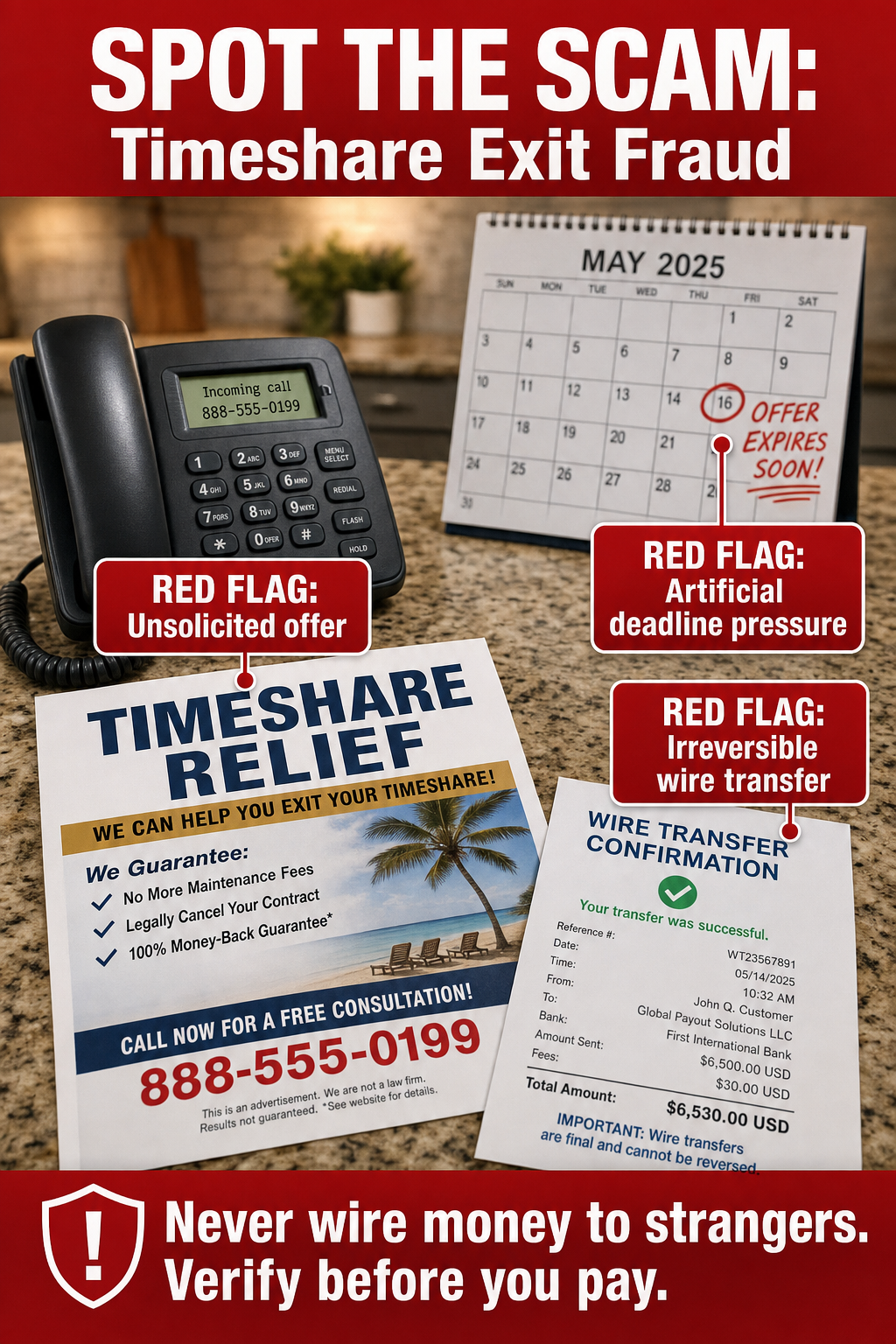
- Treat any upfront "tax" or "fee" request as an immediate red flag. Legitimate resale transactions don't require the seller to wire money before a sale closes.
- Verify the buyer or broker independently. Don't rely on contact information or "verification" provided by the caller themselves — search for the company independently and check for consumer complaints.
- Be skeptical of unsolicited outreach altogether. Genuine buyers for a hard-to-sell asset like a timeshare rarely find you first with an above-market offer.
- Report suspected fraud to the FBI's Internet Crime Complaint Center (IC3) and to OFAC if the scheme appears connected to a sanctioned network — this is exactly the kind of fraud federal authorities are actively building cases against.
- Never wire funds to Mexico-based accounts for "processing" a sale. Once funds leave the country through this channel, recovery becomes extremely difficult.
Does This Only Affect Mexico-Based Timeshares, or Is It a Broader Warning?
While this specific cartel network targets Mexico-based properties, the underlying tactic — resale or rental fraud that preys on owners desperate to exit an unwanted timeshare — mirrors the resale scams that circulate around U.S.-based properties as well, including with major domestic developers like Marriott Vacation Club and Wyndham Destinations. Any unsolicited resale or rental offer — regardless of the property's location — deserves the same level of scrutiny.
What If You're Trying to Legitimately Exit a Timeshare and Worried About Scams?
If you're trying to get out of a timeshare and you're worried about falling into a resale scam in the process, the safest path is a structured exit rather than responding to unsolicited resale offers of any kind. Understanding exactly what you own is the starting point for pursuing a legitimate exit — one that doesn't depend on wiring money to an unverified party or waiting on a buyer who may not actually exist.
Frequently Asked Questions
Is the cartel timeshare scam only targeting properties in Mexico?
Primarily, yes — the CJNG network specifically targets U.S. owners of Mexico-based timeshare properties, though the underlying resale/rental fraud tactics are similar to scams that target domestic timeshare owners as well.
What should I do if I already sent money in response to a suspicious resale offer?
Contact your bank or wire transfer provider immediately to attempt to halt or reverse the transaction, then file a report with the FBI's Internet Crime Complaint Center and consider reporting to OFAC if cartel involvement is suspected.
How can I tell if a timeshare resale offer is part of this scam network?
Any unsolicited contact demanding upfront "taxes," "fees," or "processing costs" before a sale closes — especially tied to a Mexico-based property — closely matches the documented CJNG fraud pattern and should be treated as fraudulent.
Has the U.S. government made real progress against this network?
Yes — as of February 2026, OFAC has taken six separate sanctions actions against parties linked to this specific fraud network, designating over 90 individuals and entities, in ongoing coordination with Mexican financial authorities.
Worried You're a Target, or Already Stuck With a Timeshare You Can't Safely Exit?
You don't have to navigate a resale attempt — or a scam risk — on your own. Call AxeMyTimeshare at (949) 731-6607 for a free consultation, or visit axemytimeshare.com to find out what a legitimate, structured exit could look like for your situation.



FBI Warns: Cartel-Linked Timeshare Exit Scams Have Stolen Nearly $300 Million From Owners Since 2019