
Bluegreen Vacations Timeshare Exit Guide: What Hilton Grand Vacations Owners Need to Know
Bluegreen Vacations Timeshare Exit Guide: What Hilton Grand Vacations Owners Need to Know
If you bought a Bluegreen Vacations timeshare at a Bass Pro Shops kiosk, a Smoky Mountains presentation, or an Orlando sales pitch, you probably remember the pitch: prepay for tomorrow's vacations at today's prices. What the sales team likely didn't spend much time on is what happens years later, when your points don't stretch as far as promised, your maintenance fee has climbed again, and you can't find anyone willing to take the contract off your hands. This guide breaks down how Bluegreen ownership actually works today, what changed after its 2024 sale to Hilton Grand Vacations, and the legitimate ways owners are getting out.
What Happened When Hilton Grand Vacations Bought Bluegreen Vacations?
Hilton Grand Vacations completed its acquisition of Bluegreen Vacations in an all-cash deal worth roughly $1.5 billion, according to HGV's own SEC filing. The deal closed January 17, 2024, folding Bluegreen's roughly 200,000 members and nearly 50 resorts into the Hilton Grand Vacations portfolio alongside Diamond Resorts and the core HGV brand.
For owners, that consolidation cuts both ways. On paper, a larger parent company means more resorts to book and more corporate resources behind property upkeep. In practice, it also means your contract may eventually be administered by a different customer service structure, your maintenance fee could be recalculated as HGV integrates Bluegreen's accounting systems, and — as owners of other acquired brands like Diamond Resorts have discovered — a bigger parent company rarely makes it easier to exit a contract you no longer want. Bluegreen's partnerships with Bass Pro Shops and NASCAR remain part of the marketing, but the underlying obligation — your annual points allotment and the fees attached to it — didn't change when the ownership did.
How Do Bluegreen Vacation Club Points Actually Work?
Bluegreen Vacation Club points are the currency you use to book stays, and the number you need shifts constantly based on season, unit size, and resort. A studio during a slow week in Branson might run a few thousand points; a two-bedroom villa in Orlando or Myrtle Beach during peak summer or a holiday week can require well over 14,000 points for a single stay. This is the same structure used across most modern developer point systems, and it's exactly why owners frequently discover their annual allotment covers far less than the sales presentation implied. Our breakdown of how timeshare points systems actually work goes deeper into why developer points lose real-world value the moment you sign.
The flexibility features sound appealing — banking unused points, borrowing next year's allotment, splitting a week into shorter stays — but they also mean you're competing with every other owner in the system for the same peak-season inventory, usually 11 to 12 months out. If your family is tied to summer break or a specific holiday, that competition is the single biggest gap between what the points chart promises and what you can actually book.
What Does a Bluegreen Timeshare Really Cost Every Year?
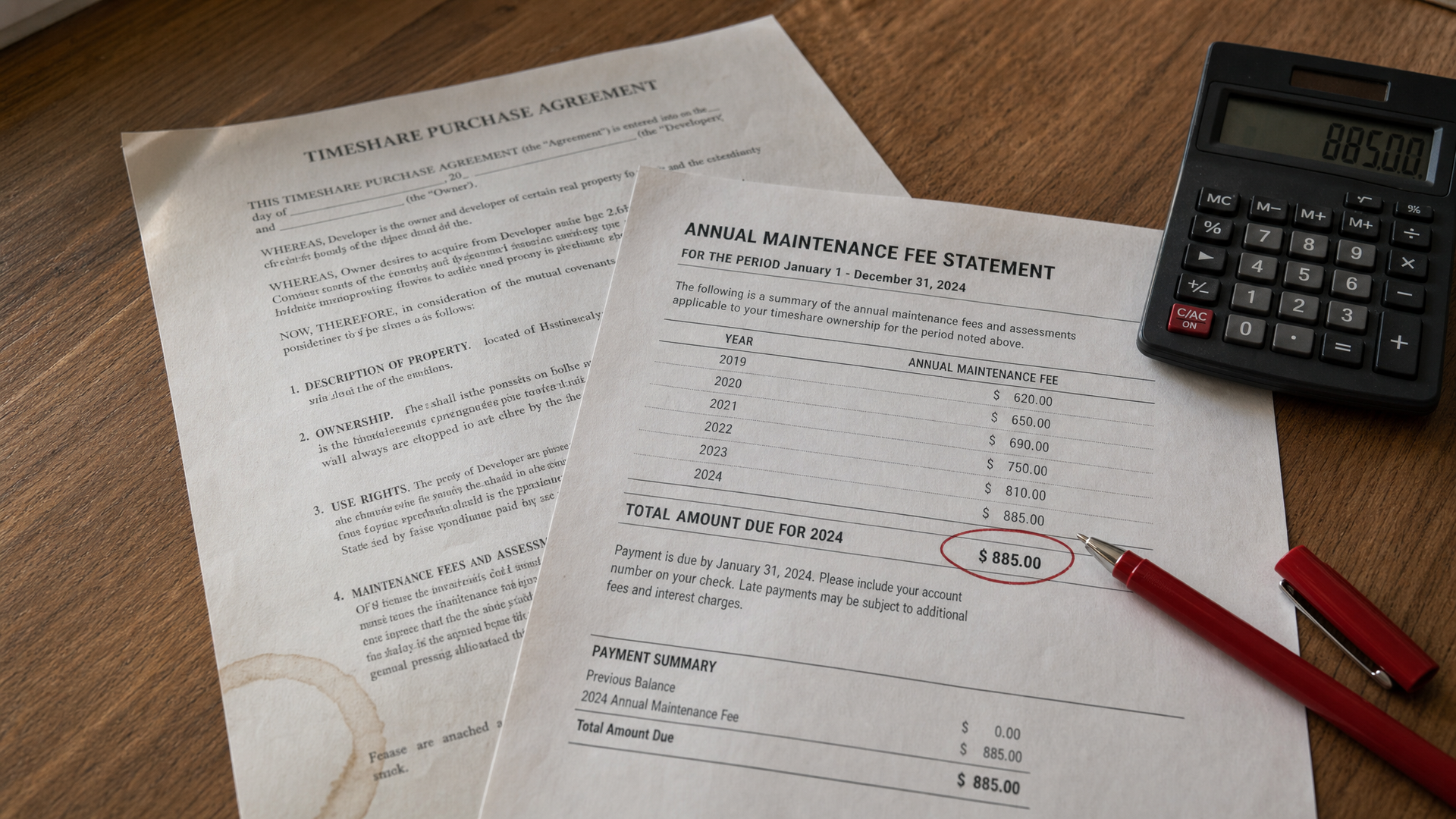
The purchase price is only the first bill. Bluegreen's annual maintenance fee combines a flat association charge with a per-point rate, meaning a 10,000-point package can run over $1,000 a year once both are added together, and a 20,000-point package can push toward $2,000 or more. On top of that baseline, owners often pay reservation fees, guest certificate fees when letting family use their points, and exchange fees if they trade into a partner network.
None of those fees are capped. Industry-wide, timeshare maintenance fees rise an average of 4 to 8 percent annually, and Bluegreen owners report the same pattern — modest increases most years, with occasional sharper jumps tied to renovation projects or special assessments. If you financed your purchase through the developer, the interest on that loan compounds the problem; developer financing on timeshares commonly runs well above a typical personal loan rate, which our guide on timeshare mortgage interest rates covers in more detail. Run the math over 10 or 20 years and the "prepaid vacation" framing starts to look a lot more like an open-ended financial commitment.
Why Is It So Hard to Sell or Walk Away From a Bluegreen Timeshare?
Because the resale market for timeshares is badly oversupplied, and Bluegreen is no exception. Unlike a condo, a Bluegreen interest typically isn't a real estate asset that appreciates — it's a long-term vacation use contract, and the secondary market reflects that. There are far more owners trying to sell than buyers willing to purchase, and it's common for units to be unsellable even at $1. Companies that promise a fast resale or a guaranteed buyer are one of the most frequently reported timeshare scams, according to the Federal Trade Commission's consumer guidance on timeshares, which specifically warns owners against paying upfront fees to resale companies making those kinds of promises.
The practical result is that most Bluegreen owners who no longer want their contract aren't looking for a buyer — they're looking for a way to legally terminate the obligation itself.
Does Bluegreen Offer a Deed-Back or Exit Program?
Bluegreen does have an internal deed-back option for some owners, similar to programs offered by Marriott and Wyndham, but approval isn't guaranteed and tends to favor owners who are paid in full, current on fees, and holding a unit the resort actually wants back. Owners who are delinquent, financing a balance, or holding lower-demand inventory are frequently declined. Our full breakdown of timeshare deed-back programs covers who typically qualifies across Bluegreen, Marriott, and Wyndham, and what to do if your request is rejected.
Getting turned down for an internal deed-back doesn't mean you're stuck. It means the next step involves either a legal rescission (if you're still within your state's cancellation window) or working with a vetted third-party exit professional who understands Bluegreen's specific contract language and HGV's current handling of legacy Bluegreen accounts.
What Are Your Legal Options to Cancel a Bluegreen Vacations Timeshare?
If you signed recently, check your rescission window first — every state that permits timeshare sales requires one, typically 3 to 15 days depending on the state, and it's the fastest, cleanest way to walk away with a full refund and no further obligation. Our guide to the timeshare rescission period by state shows exactly how long you have and how to send the cancellation notice correctly.
Past that window, your realistic paths are: pursue Bluegreen's deed-back program, negotiate directly with the resort, or work with an exit company experienced specifically with Bluegreen and HGV-administered contracts. We lay out all five legitimate exit pathways — and how to tell them apart from a scam — in how to get out of a timeshare legally.
Red Flags to Watch For Before You Pay Anyone
- Guaranteed resale promises. No legitimate company can guarantee your Bluegreen unit will sell — the FTC flags this as a common scam tactic.
- Upfront fees before any work is done. Legitimate exit help shouldn't require a large payment before anyone has reviewed your contract.
- Pressure to stop paying immediately. Stopping fee payments without a formal exit strategy can lead to delinquency reporting and collections, not a faster exit.
- "We'll have you out in 30 days." Real Bluegreen exits typically take 6 to 18 months depending on the pathway. Rushed timelines are a warning sign, not a selling point.
- Unsolicited calls claiming to represent Bluegreen or HGV. Scammers use public ownership records to target owners directly.
Bluegreen Timeshare: Staying vs. Exiting, by the Numbers
Staying (10,000-point package)ExitingYear 1 cost~$1,100–$1,200 in feesFree consultation to review optionsYear 10 cost (at 6% annual fee growth)~$2,000+/year$0 in future maintenance feesResale valueTypically near $0N/AOngoing obligationPerpetual, may pass to heirs
Terminated
The exact cost of exiting depends entirely on your specific contract, loan balance, and how current you are on fees, which is why this isn't a number we'll guess at over the internet.
FAQ
Q1. Can I still exit a Bluegreen Vacations timeshare now that it's owned by Hilton Grand Vacations?
Yes. The 2024 acquisition changed Bluegreen's ownership, not the legal terms of your existing contract. Owners can still pursue rescission if within their state's cancellation window, apply for Bluegreen's internal deed-back program, or work with a vetted exit professional familiar with HGV-administered Bluegreen accounts.
Q2. How much are Bluegreen maintenance fees typically?
Bluegreen combines a flat association fee with a per-point charge. A 10,000-point package commonly runs $1,100–$1,200 per year, while 20,000-point owners often see $2,000 or more. Fees typically rise 4–8% annually and have no contractual cap.
Q3. Does Bluegreen's deed-back program actually work?
Sometimes, but approval is selective. Owners who are paid in full, current on fees, and holding in-demand inventory have the best odds. Owners who are declined still have legal exit pathways available through a third-party exit professional.
Q4. Is it too late to cancel if I already signed?
Only if your state's rescission period has passed — typically 3 to 15 days after signing, depending on the state. Past that window, cancellation isn't automatic, but legal exit pathways still exist; they just look different than a simple rescission letter.
Q5. Can I just sell my Bluegreen timeshare instead of exiting?
You can try, but the resale market is severely oversupplied and most timeshares, Bluegreen included, sell for little to nothing. The FTC specifically warns against resale companies that promise a fast sale or a guaranteed buyer in exchange for an upfront fee.
Ready to Look at Your Options?
Every Bluegreen contract is different — deeded or trust-based, financed or paid off, current or behind on fees — and the right exit path depends on those specifics. Marcus Reed and the Axe My Timeshare team have reviewed Bluegreen contracts alongside Wyndham, Marriott Vacation Club, Diamond Resorts, and Westgate. Before you talk to anyone else, see what to ask a timeshare exit company on your first call so you know a real answer from a sales pitch.
Get a free, no-obligation consultation: (949) 731-6607 or visit axemytimeshare.com




FBI Warns: Cartel-Linked Timeshare Exit Scams Have Stolen Nearly $300 Million From Owners Since 2019