The FTC Just Won a $140 Million Judgment Against a Timeshare Exit Scammer. Here's What That Means for You.
The FTC Just Won a $140 Million Judgment Against a Timeshare Exit Scammer. Here's What That Means for You.
By Marcus Reed | Senior Exit Advisor, Axe My Timeshare | June 17, 2026
If you've been thinking about hiring a timeshare exit company — or if you already have one and you're not sure whether to trust them — a federal court ruling from April 2026 just gave you the clearest possible warning about what bad actors in this industry look like, and exactly how much damage they can do.
A federal judge ordered Christopher Carroll, the president and CEO of a timeshare exit operation called Square One Group, to pay $140 million after the Federal Trade Commission and the Wisconsin Department of Justice proved his companies defrauded more than 17,000 consumers — most of them older adults — out of more than $90 million. Carroll is now permanently banned from ever marketing timeshare exit services again.
This is the largest single judgment the FTC has secured in a timeshare exit case. And it tells you everything you need to know about how to evaluate any exit company you're currently considering.
What Did Square One Group and Consumer Law Protection Actually Do?
Carroll's operation didn't look like a scam from the outside — which is the whole point. The scheme operated under several company names: Square One Group, Consumer Law Protection LLC, Premier Reservations Group, Resort Transfer Group, and Timeshare Help Source. Each name was chosen to sound professional and legitimate. The reality was the opposite.
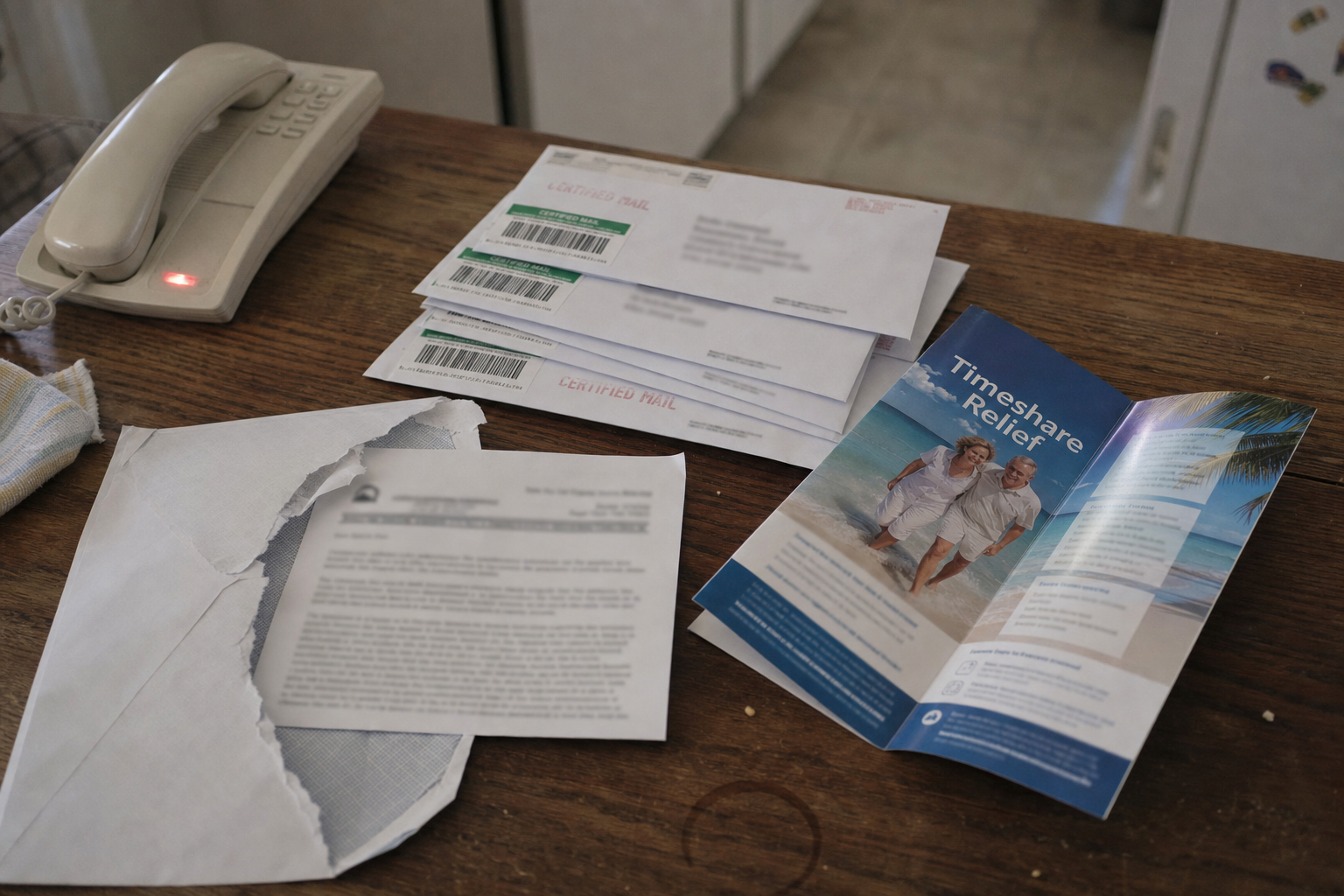
The operation used direct mail campaigns to pull timeshare owners into in-person presentations at hotels and restaurants across the country. Once they had owners in the room, the pressure was intense. According to the FTC complaint filed by the Department of Justice on the Commission's behalf, the companies made a string of false and misleading claims, including:
- Falsely claiming to be affiliated with the timeshare companies (Wyndham, Marriott, Bluegreen) that owners were trying to exit
- Telling owners that they couldn't get out of their contracts without paying Carroll's companies' fees — which ranged from $5,000 to more than $80,000 per family
- Promising refunds they never delivered
- Requiring owners to sign contracts that they were specifically told could not be cancelled — a direct violation of the FTC's Cooling-Off Rule, which gives consumers the right to cancel a door-to-door sales contract within three business days
When owners paid, the promised exits frequently never happened. When they asked for refunds, the companies refused or disappeared.
The court granted summary judgment to both the FTC and Wisconsin's attorney general, meaning the evidence was so clear that a trial wasn't necessary. Carroll is now jointly and severally liable for $95,243,688.50 in consumer redress and $45,485,702 in civil penalties — totaling $140 million.
Why Does the FTC Keep Seeing This Same Pattern?
This isn't the first time the FTC has had to step in on timeshare exit fraud, and it won't be the last. The 2024–2025 period was especially brutal for the industry. Multiple major exit firms collapsed into bankruptcy, state attorneys general issued cease-and-desist orders across several states, the Better Business Bureau revoked A+ accreditations from companies that had held them for years, and class action lawsuits piled up in federal courts.
The pattern that connects almost every collapsed firm is the same: large upfront fees, vague timelines, no written guarantee of outcome, and high-pressure sales environments designed to prevent owners from doing due diligence before signing.
The timeshare exit market exists because a real problem exists. Resorts like Wyndham Destinations, Marriott Vacation Club, and Bluegreen Vacations write contracts that are genuinely difficult to exit. Maintenance fees have climbed from an industry average of $731 per year in 2010 to over $1,480 today, with no contractual cap on future increases. Resale markets are flooded. Internal deed-back programs like Wyndham's Ovation have limited acceptance criteria. Owners who signed decades ago are stuck.
Bad actors have exploited that real desperation for years. The FTC ruling against Carroll is the clearest signal yet that enforcement is tightening — but it doesn't mean every exit company is gone. It means owners need to know exactly what to look for before handing over a dollar to anyone.
What Are the Red Flags That Caught Carroll's Operation?
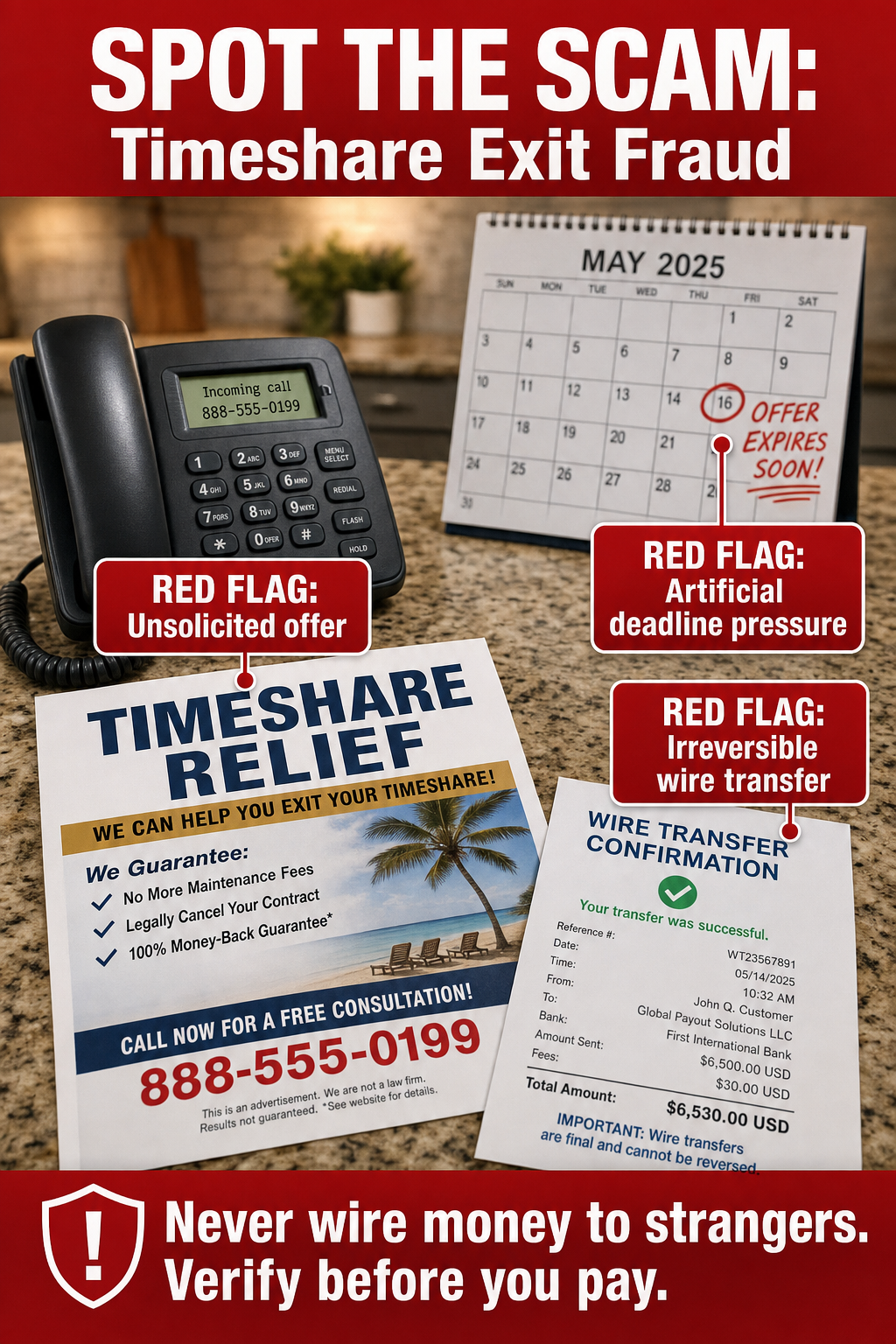
The FTC's case against Square One Group and Consumer Law Protection maps almost perfectly onto the red flag checklist that separates scam operations from legitimate exit providers. Before you sign anything with any exit company, run through this list:
High-pressure in-person presentations. Carroll's operation specifically used hotel and restaurant sales events to create urgency. Any exit company that invites you to a group presentation or "seminar" — especially one with a free meal — is replicating the exact tactic that got this company sued. Legitimate providers talk to you on your schedule, not theirs.
Claims of resort affiliation. Carroll's companies falsely told owners they were connected to the resorts themselves. No independent timeshare exit company is affiliated with Wyndham, Marriott, Bluegreen, Westgate, or any other developer. If a company implies otherwise, walk away.
Fees you can't cancel. The FTC Cooling-Off Rule exists specifically to protect consumers from being locked into contracts they signed under pressure. Any exit company that tells you the agreement you're signing is non-cancellable is either lying or deliberately violating federal law. Both are disqualifying.
No written agreement explaining the process. Legitimate exit professionals provide written documentation of what they will do, how long it should take, and what your rights are if they don't deliver. Vague verbal promises are not a substitute.
Guaranteed outcomes. No ethical attorney can guarantee the result of a legal negotiation. Any company that promises a "100% guaranteed timeshare exit" is either misrepresenting the process or setting you up for a dispute when they don't deliver.
How Do You Find a Legitimate Timeshare Exit Company After This?
The Carroll ruling is a reason to be careful — not a reason to give up on exit entirely. Thousands of timeshare owners successfully exit contracts with Wyndham, Marriott, Hilton Grand Vacations, Bluegreen, and Westgate every year through vetted professionals who follow a transparent, documented process.
Here's what legitimate exit looks like, and what you should verify before proceeding with anyone:
Check their BBB profile. The Better Business Bureau tracks complaint history and response patterns over time. Look at how a company responds to negative feedback, not just how many reviews it has. A company with 4 complaints and professional responses is a better signal than one with 200 reviews and a pattern of ignoring disputes.
Verify attorney involvement. If an exit company claims licensed attorneys are involved in your case, confirm those attorneys exist. Every licensed attorney in the United States is registered with their state bar — you can search their name on the state bar association's official website in about 30 seconds. If you can't find the attorney, there isn't one.
Look for escrow-based or money-back fee structures. Companies that hold fees in escrow until exit is completed have a financial incentive to actually finish the job. That structure protects you in a way that upfront-fee-only models don't.
Ask about timelines honestly. A legitimate timeshare exit takes between 6 and 18 months in most cases, depending on the resort, contract type, and exit pathway. Any company promising results in 30 or 60 days is either uninformed or misleading you.
If you want a second opinion before committing to any exit company — or if you've already paid someone and you're not sure whether to trust the process — a free consultation with Axe My Timeshare is a good place to start. We review your situation independently and tell you what your realistic options look like with no pressure and no upfront cost.
What Happens to the Owners Carroll Defrauded?
As part of the court order, Carroll is required to pay $95,243,688.50 in consumer redress. That money is designated to go back to the owners whose families paid the operation and received nothing in return — the retired couples, the widows and widowers, the families who thought they'd finally found a way out and instead lost thousands more.
Whether and how that restitution actually reaches affected owners will depend on the FTC's distribution process. Owners who believe they were victimized by Carroll's companies — specifically Square One Group, Consumer Law Protection, Premier Reservations Group, Resort Transfer Group, or Timeshare Help Source — should monitor the FTC enforcement page for this case for updates on restitution distribution.
The Bottom Line
The $140 million ruling against Christopher Carroll and his network of companies is the most significant timeshare exit fraud judgment in FTC history. It confirms what many owners already suspected: the exit industry has real bad actors, and the consequences for owners who choose the wrong company can be devastating.
It also confirms something equally important: the exit problem is real, enforcement against predatory operators is real, and legitimate pathways out of Wyndham, Marriott, Bluegreen, and other contracts exist and work every day.
The difference between an owner who successfully exits and one who gets victimized a second time is almost always due diligence. Know what legitimate looks like. Know what the red flags are. And if you're not sure where to start, talk to someone who doesn't have a financial stake in steering you toward a specific answer.
If you're currently trapped in a timeshare contract and want a straight read on your options, start with a free consultation here. No upfront cost. No pressure. Just honest information about where you stand.
Frequently Asked Questions
What was the FTC's $140 million timeshare ruling about?
A federal court ordered Christopher Carroll, the operator of a timeshare exit scheme running under names including Square One Group and Consumer Law Protection, to pay $140 million after the FTC and Wisconsin's attorney general proved the operation defrauded more than 17,000 consumers — mostly older adults — out of more than $90 million. Carroll is permanently banned from marketing timeshare exit services.
How do I know if a timeshare exit company is legitimate?
Verify their BBB profile and complaint response patterns, confirm any attorneys through your state bar association's public records, look for escrow-based or money-back guarantee fee structures, and get everything in writing before paying anything. Any company that pressures you to decide immediately or promises guaranteed exit outcomes is a red flag.
Can I still legally exit my timeshare contract after this ruling?
Yes. The FTC ruling targeted a fraudulent operator, not legitimate timeshare exit services. Thousands of owners successfully exit contracts with Wyndham, Marriott, Bluegreen, and other resorts every year through vetted professionals who follow a transparent, documented process.
What is the FTC Cooling-Off Rule and does it apply to timeshare exit?
The FTC Cooling-Off Rule gives consumers the right to cancel a door-to-door or in-person sales contract within three business days of signing. Carroll's companies violated this rule by forcing owners to sign contracts that they were told could not be cancelled. Any exit company telling you a signed agreement is non-cancellable may be breaking federal law.
How long does a legitimate timeshare exit take?
Most legitimate exits take between 6 and 18 months, depending on the resort, contract type, and exit pathway. See Axe My Timeshare's
complete guide to how the exit process works for a full breakdown of what to expect at each stage.
Marcus Reed is a Senior Exit Advisor at Axe My Timeshare with experience reviewing timeshare contracts across Wyndham, Marriott Vacation Club, Bluegreen Vacations, Hilton Grand Vacations, and Westgate Resorts. Axe My Timeshare is an independent consumer advocacy resource and is not affiliated with any resort, developer, or timeshare company. This article is for informational purposes only and does not constitute legal advice.



FBI Warns: Cartel-Linked Timeshare Exit Scams Have Stolen Nearly $300 Million From Owners Since 2019