
Right of First Refusal (ROFR): Why You Can't Just Resell Your Way Out of a Timeshare
Right of First Refusal (ROFR): Why You Can't Just Resell Your Way Out of a Timeshare

Trying to resell a timeshare instead of pursuing a formal exit? Before you list it, there's a contract clause that can quietly derail the entire transaction — and it's one of the biggest reasons resale rarely works as a real path to get out of a timeshare.
What Is the Right of First Refusal in a Timeshare Contract?
The Right of First Refusal (ROFR) is a clause that lets the original resort developer step in and buy back a timeshare before it can be sold to any third-party buyer. It exists specifically to protect the developer's market value: if owners could freely resell units for a fraction of the original price, that would undercut the resort's own new-unit sales and depress the perceived value of its entire portfolio. So when an owner wants to sell, the sale terms — price included — have to be disclosed to the resort first, giving the developer the option to match the deal and reclaim the unit itself.
How Does the ROFR Process Actually Work?
The sequence is straightforward but can stall a resale at any point:
- The owner lists the unit on the resale market and negotiates terms with a third-party buyer.
- A sales agreement is signed, and the deal moves to the resort for review.
- The resort evaluates the offer — the specific week or points allocation, unit size, and any outstanding financial obligations — against its own strategic interests.
- The resort decides: either exercise ROFR and buy the unit back at the agreed price, or waive it and let the original sale proceed.
What Happens If the Resort Exercises Its ROFR?
For the buyer, it means the deal is off — the resort steps into their place, and any deposits or escrow funds are fully refundable. Some resorts offer to redirect that money toward a different unit in their portfolio, which can sound like a consolation prize but frequently comes at a higher price than the original deal. For the seller, the outcome is largely neutral: the resort has to honor the same price and terms that were agreed with the third-party buyer, so the sale still closes — just to a different buyer.
Why Does ROFR Make Resale Such an Unreliable Exit Strategy?
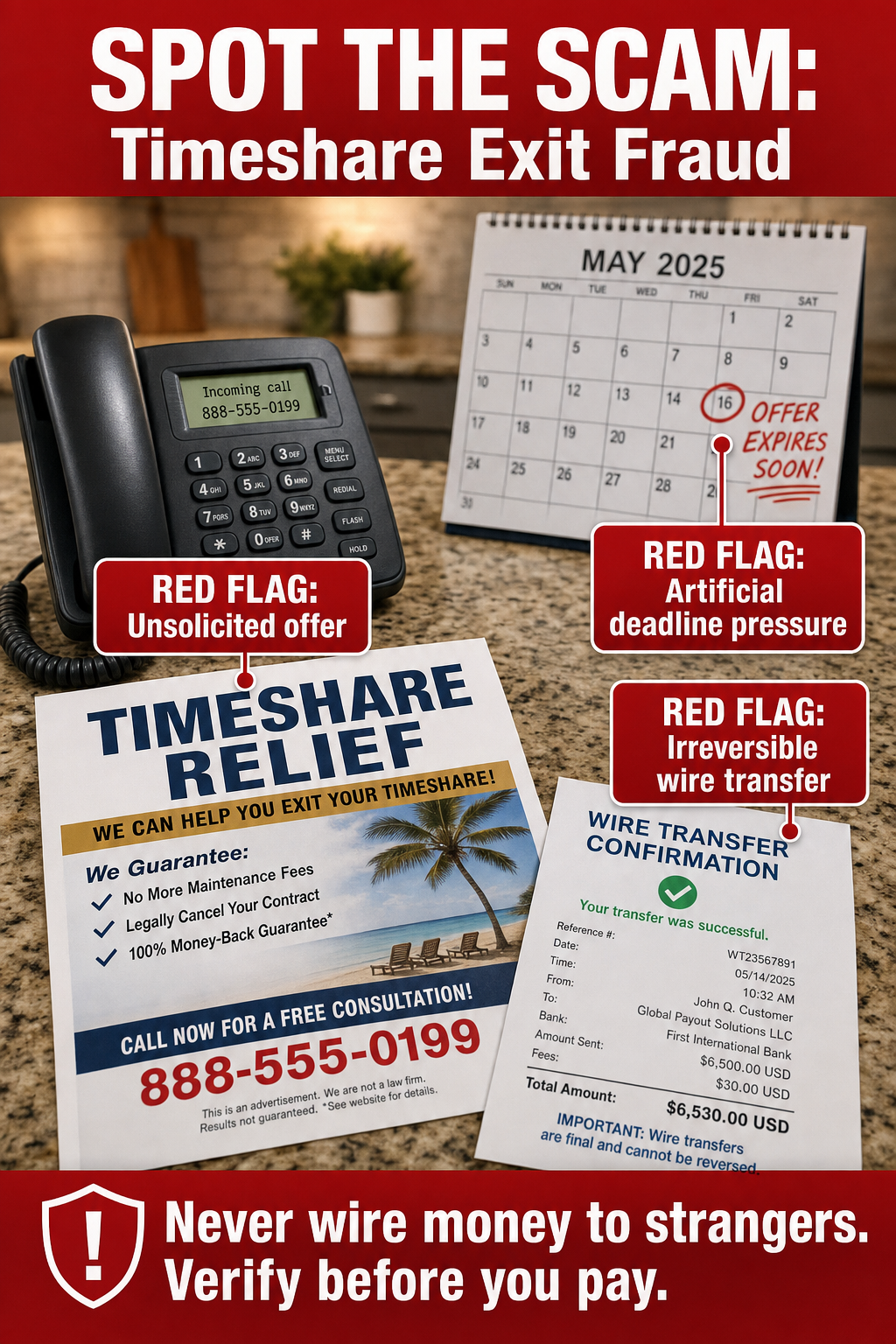
Because it introduces uncertainty into a process that already has weak underlying demand. Even setting ROFR aside, timeshare resale markets are notoriously soft — many units list for a dollar and still don't sell. Add a developer that can intervene and reclaim the unit at will, and it becomes clear why resale listings sit for months or years without resolving anything. This is also where a lot of timeshare resale scams target frustrated owners: companies promising a guaranteed buyer or an inflated resale value, collecting an upfront fee, and then failing to deliver — preying specifically on owners who've already discovered how hard genuine resale is. If you're evaluating any resale or exit company, that's a strong signal to ask directly: is timeshare exit legit for this specific company, and can they show a documented track record before you pay anything upfront.
Does ROFR Apply Across All Major Timeshare Developers?
ROFR clauses are standard across most of the industry — Marriott Vacation Club, Hilton Grand Vacations, Wyndham Destinations, and Diamond Resorts all include some version of this clause in their contracts. It's not a sign of a uniquely restrictive developer; it's a near-universal feature of the vacation ownership resale model, which is exactly why resale so rarely functions as a realistic timeshare exit strategy regardless of which brand you own with.
If Resale Isn't Realistic, What Actually Works?
A structured exit is a fundamentally different process than a resale attempt — it addresses the contract directly with the developer rather than trying to find a willing third-party buyer in a market that's often functionally frozen. Understanding exactly what you own is the starting point for figuring out which legitimate exit path applies, whether you're pursuing a Wyndham timeshare exit, working to cancel a Diamond Resorts contract, or trying to figure out how to get out of a Hilton Grand Vacations club timeshare.
Frequently Asked Questions
Can I refuse to let the resort exercise its ROFR on my timeshare?
No. ROFR is a contractual right the resort holds — if it chooses to exercise it, the owner is generally obligated to honor that under the terms of the original purchase contract.
Does ROFR mean I automatically get less money for my timeshare?
Not necessarily — if the resort exercises its ROFR, it has to match the agreed sale price. The bigger issue is the delay and uncertainty ROFR introduces, not a reduced payout for the seller specifically.
Is timeshare resale ever a realistic way to exit a contract?
Rarely, given weak overall demand plus ROFR-related uncertainty. Most owners find a structured exit process more reliable than waiting for a resale that may never close.
How do I know if a timeshare exit company is legitimate and not a resale scam?
Look for a documented track record, clear fee structure disclosed upfront, and no guarantee of a specific resale price or timeline — legitimate exit companies won't promise outcomes a volatile resale market can't actually deliver.
Stuck Trying to Resell a Timeshare That Won't Sell?
If ROFR, a soft resale market, or a scam attempt has left you no closer to getting out, there's a more reliable path forward. Call AxeMyTimeshare at (949) 731-6607 for a free consultation, or visit axemytimeshare.com to find out what a structured exit could look like for your situation.



FBI Warns: Cartel-Linked Timeshare Exit Scams Have Stolen Nearly $300 Million From Owners Since 2019