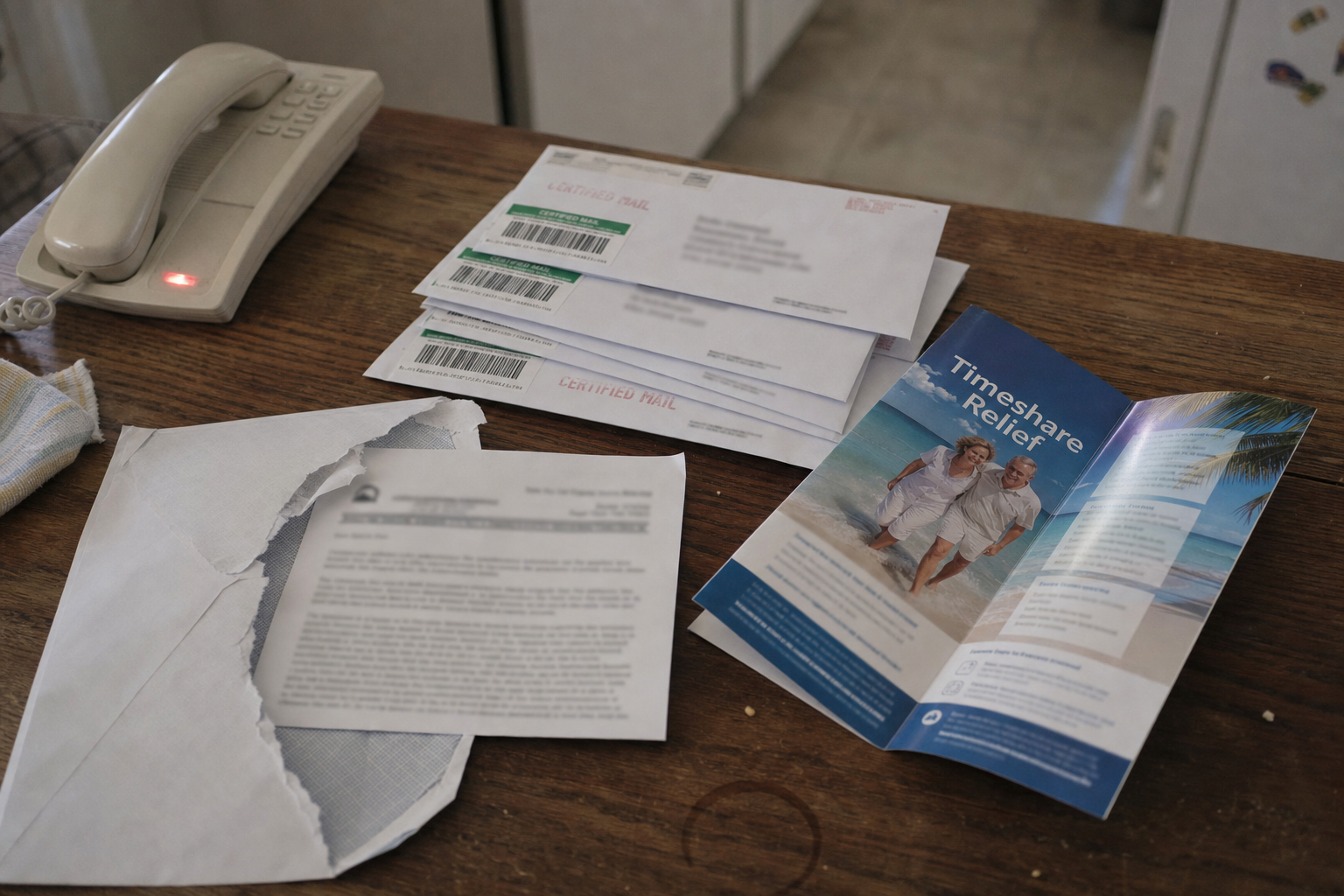
Wyndham Timeshare Sales Tactics Exposed: A Former Insider Breaks the Silence
Wyndham Timeshare Sales Tactics Exposed: A Former Insider Breaks the Silence

Editor's Note:The following is a firsthand account submitted to Axe My Timeshare by a former vacation ownership sales employee. The author's identity has been verified by our editorial team and is being withheld at their request to protect them from professional retaliation. This is a real account. Nothing has been fabricated. Names of specific colleagues have been omitted or changed.
I'm not using my real name. Anyone who has spent time inside the timeshare industry knows exactly why.
I spent several weeks working at a Wyndham Destinations vacation ownership sales office in Southern California. I never sold a single contract — not because I couldn't, but because I refused to. What I saw from the inside was enough to convince me that the modern timeshare industry isn't a vacation product. It's a debt trap wrapped in a Presidential Suite.
I'm writing this because the people sitting across those tables deserve to know what's actually happening — before they sign anything.
What Does the Wyndham Timeshare Sales Process Actually Look Like?
The Wyndham Destinations sales process is a structured, ten-step system designed to manufacture emotional buy-in and then close fast before rational thinking kicks in. Every member of the floor knows the script. Nothing is accidental.
It begins before the customer even walks in. Guests are recruited through what the industry calls "OPCs" — off-property contacts — who offer "free gifts" like steak dinners, theme park tickets, or cash vouchers in exchange for attending a 90-minute presentation. Everyone in the room knows it will run three to four hours. Everyone except the customer.
The first phase is called "discovery." Your tour guide — a friendly, non-licensed rep — will ask you where you vacation, how much you typically spend, and what your dream destination looks like. This feels like small talk. It isn't. Every answer is used to tailor a pitch around your specific vulnerabilities. The discovery process is reverse-engineered from the close.
How Does the Wyndham Points System Work — and Why Is It Misleading?
Wyndham sells points rather than deeded weeks. On paper, this sounds flexible. In practice, it's deliberately opaque.
You purchase a block of points — typically tens of thousands — that can theoretically be used at resorts across the Wyndham portfolio. Availability is divided into three periods: Red (peak season), Blue (mid-season), and White (off-peak). Sales reps are trained to emphasize flexibility and White-period availability. What they are not trained to tell you: White-period availability is nearly nonexistent at desirable properties. The rooms are frequently unavailable on the Wyndham booking portal while simultaneously listed on Expedia or Booking.com for a cash rate that undercuts the cost of owning the points required to book them.
When I asked a senior sales rep about this during training, the answer was a redirect. We weren't there to discuss logistics. We were there to sell the dream.
What Happens When a Wyndham Customer Says "No"?
Saying no at a timeshare presentation does not end the presentation. It escalates it.
After the tour guide phase, a licensed sales manager steps in — this is the "T.O." (turnover). The manager has authority to quote prices, and the pricing conversation follows a predictable pattern: a dramatically high anchor price is stated, followed by a "today-only" discount that brings the number down to what was always the intended offer. This manufactured concession is designed to trigger reciprocity — you feel like you're getting a favor, even though nothing about the offer has actually changed.
If the customer holds firm through the manager close, they are directed to an "exit survey" — which is not an exit. It is a final-attempt desk where a different rep offers a trial package or sampler product at a lower price point. The goal is to get any contract signed, any credit card charged.
I watched customers who said "no" eleven times before they finally got out the door. Some of them signed on attempt nine.
Why Is the Wyndham Rescission Period Kept Secret?
In most U.S. states, timeshare buyers have a legally mandated rescission period — a window of typically five to ten days during which they can cancel the contract without penalty. In California, that window is five days under California Civil Code § 1689.
The rescission period is real. It is also something sales reps are explicitly trained not to mention.
The reason is simple: commission. When a buyer cancels within their rescission window, the salesperson forfeits their commission entirely. The institutional incentive is to keep buyers in the dark about the exit door until the clock runs out.
If you or someone you know has recently purchased a timeshare, check your state's rescission deadline immediately. Many owners don't realize they can legally cancel — and that window closes fast.
🚨 Already past the rescission window? You still have options. Get a free case review from the timeshare exit specialists at Axe My Timeshare →
What Kind of Financing Do Timeshare Companies Use?
The purchase price is only the beginning. Most Wyndham timeshare contracts are financed directly through Wyndham's in-house lending arm at interest rates ranging from 14% to 18% APR — rates that rival payday lenders and subprime credit cards.
A $25,000 timeshare purchase financed at 17% over ten years does not cost $25,000. It costs over $46,000 by the time the final payment is made — for a product with no recognized resale market. You cannot sell a timeshare for what you paid. You often cannot give one away. The secondary market for timeshare points is effectively zero.
Layered on top of the purchase price are annual maintenance fees, which are contractually guaranteed to increase every year. Most owners see these fees climb three to five percent annually. They are not optional. Missing a maintenance payment triggers late fees, collections, and ultimately foreclosure proceedings — a foreclosure that can damage your credit score just like a missed mortgage.
The Consumer Financial Protection Bureau (CFPB) has fielded thousands of complaints about timeshare financing practices. The Federal Trade Commission (FTC) maintains public guidance on vacation ownership scams for exactly this reason.
What Do Real Wyndham Timeshare Owner Reviews Say?
The gap between the glossy presentation and the lived reality shows up clearly in the review record. Wyndham Destinations sales offices consistently average between 1.0 and 1.5 stars on Consumer Affairs, Google, and the Better Business Bureau.
Common complaints include:
- Aggressive and deceptive sales tactics, including misrepresentations about investment value
- Promises made verbally during the presentation that do not appear anywhere in the contract
- Maintenance fees increasing far beyond what was implied during the sale
- Complete inability to book the resorts and dates that made the purchase attractive in the first place
- Difficulty reaching anyone at Wyndham once the contract is signed and money has changed hands
I read these reviews before I ever took a customer on a tour. When I raised concerns with management, I was told that unhappy customers "don't represent the full picture" and that my job was to focus on the people who love their membership. Those people exist. They are vastly outnumbered.
Is a Timeshare a Good Investment?
No. A timeshare is not a real estate investment by any recognized financial definition.
Despite what sales reps say on the floor — and many do call it "real property" and draw comparisons to appreciating real estate — a timeshare interest does not appreciate. It does not build equity. It cannot be used as collateral. It cannot be sold through a standard real estate transaction.
What you purchase is a right-to-use — a contractual entitlement to access a resort product that is subject to availability, subject to developer rule changes, and subject to ongoing fees that you are legally obligated to pay for the rest of your life, or until you die and the obligation transfers to your estate.
The phrase "real estate" is used during timeshare sales presentations for one reason: it makes the product sound more legitimate than it is. The FTC considers misleading real estate comparisons in timeshare sales to be a consumer protection issue.
How Do You Get Out of a Wyndham Timeshare?
If you own a Wyndham timeshare and want out, you have several potential paths. We cover these in detail on our Wyndham timeshare exit guide, but here's the overview:
1. Wyndham's Internal Exit Program (Ovation by Wyndham) Wyndham offers a voluntary surrender program called Ovation. Eligibility is selective, and the program is not universally available. Acceptance is not guaranteed, and the process can be slow.
2. Negotiate Directly with the Developer Some owners have success contacting Wyndham's owner services department directly and requesting a deed-back. Results vary significantly. Having documentation of misrepresentations made during the sales process can strengthen your position.
3. Work with a Legitimate Timeshare Exit Company A reputable timeshare exit company reviews your contract, identifies grounds for cancellation — such as misrepresentation, failure to disclose the rescission period, or predatory lending practices — and works to release you from the obligation through legal means.
4. Consult a Consumer Protection Attorney If your sale involved outright misrepresentation — promises about availability, investment value, or resale potential that were not delivered — you may have grounds for a legal claim under state consumer protection statutes.
💬 Wondering which exit path applies to your situation? Talk to the team at Axe My Timeshare for a no-obligation review of your contract →
What Is the Sales Floor Culture Really Like Inside a Timeshare Office?
No insider account of the timeshare industry is complete without addressing the culture.
The morning meeting at a timeshare sales office is not a business meeting. It is a revival. The sales director leads the team through high-energy call-and-response, emotional storytelling, and motivational frameworks borrowed from self-help culture.
The message, delivered daily, is that doubt is the enemy of sales and that negative thinking is the reason contracts aren't closing.
I heard a story at one of these morning sessions about a couple on the brink of divorce who reconciled after attending a vacation ownership presentation. When I asked a colleague about it afterward, he shrugged. "Doesn't matter if it's true," he told me. "It works."
That's the culture. Truth is instrumentalized. What matters is whether something moves people toward a signature.
When a salesperson starts to doubt the product — and they all do eventually — the culture pathologizes that doubt as weakness. This is by design. Guilt and hesitation are managed out of the room so that transactions can be managed in.
Final Thoughts from Someone Who Walked Away
I left after three tours and zero sales. I'm not proud that I was ever inside that building, but I am proud that no one handed over their retirement savings because of anything I said.
The timeshare industry is not uniformly evil. There are owners who use and enjoy their memberships. But the sales apparatus surrounding vacation ownership — the bribed attendees, the manufactured urgency, the hidden rescission windows, the 17% financing — is predatory at its structural foundation.
If you are reading this because you're sitting on a contract you regret, know that you are not alone and you are not without options. Thousands of people exit timeshare agreements every year. The process takes time and the right help, but it is possible.
Do not pay maintenance fees indefinitely on something that was misrepresented to you. Do not assume you are stuck.
🔑 Ready to explore your exit options? The team at Axe My Timeshare specializes in legitimate, legal timeshare exits. Start with a free consultation — no pressure, no obligation.
Frequently Asked Questions
Can a timeshare company legally hide the rescission period from you? Disclosing the rescission period is required in the contract itself, but sales reps are not obligated to verbally highlight it — and are financially incentivized not to. Always read your full contract and locate the cancellation window before leaving the presentation. Learn more about your rescission rights here.
Is a timeshare considered real property? Some timeshare products involve a deeded real estate interest, but the deed does not function like traditional real property. It typically cannot be mortgaged, sold at market value, or transferred easily. The FTC warns consumers about misleading real estate comparisons in timeshare sales.
What is the Wyndham Ovation program? Ovation by Wyndham is the developer's internal exit program that allows eligible owners to surrender their timeshare interest. Not all owners qualify, and the program does not apply in all circumstances. A third-party exit review can help determine whether Ovation or another route is the better fit.
Are timeshare maintenance fees negotiable? No. Maintenance fees are a contractual obligation. Failure to pay can result in late fees, collections activity, and foreclosure proceedings that affect your credit report.
What should I do if I was misled during a timeshare presentation? Document everything you remember — specific claims made verbally, promises about availability or investment value, any pressure tactics used. Then consult with a timeshare exit specialist or consumer protection attorney to review your options under state law.



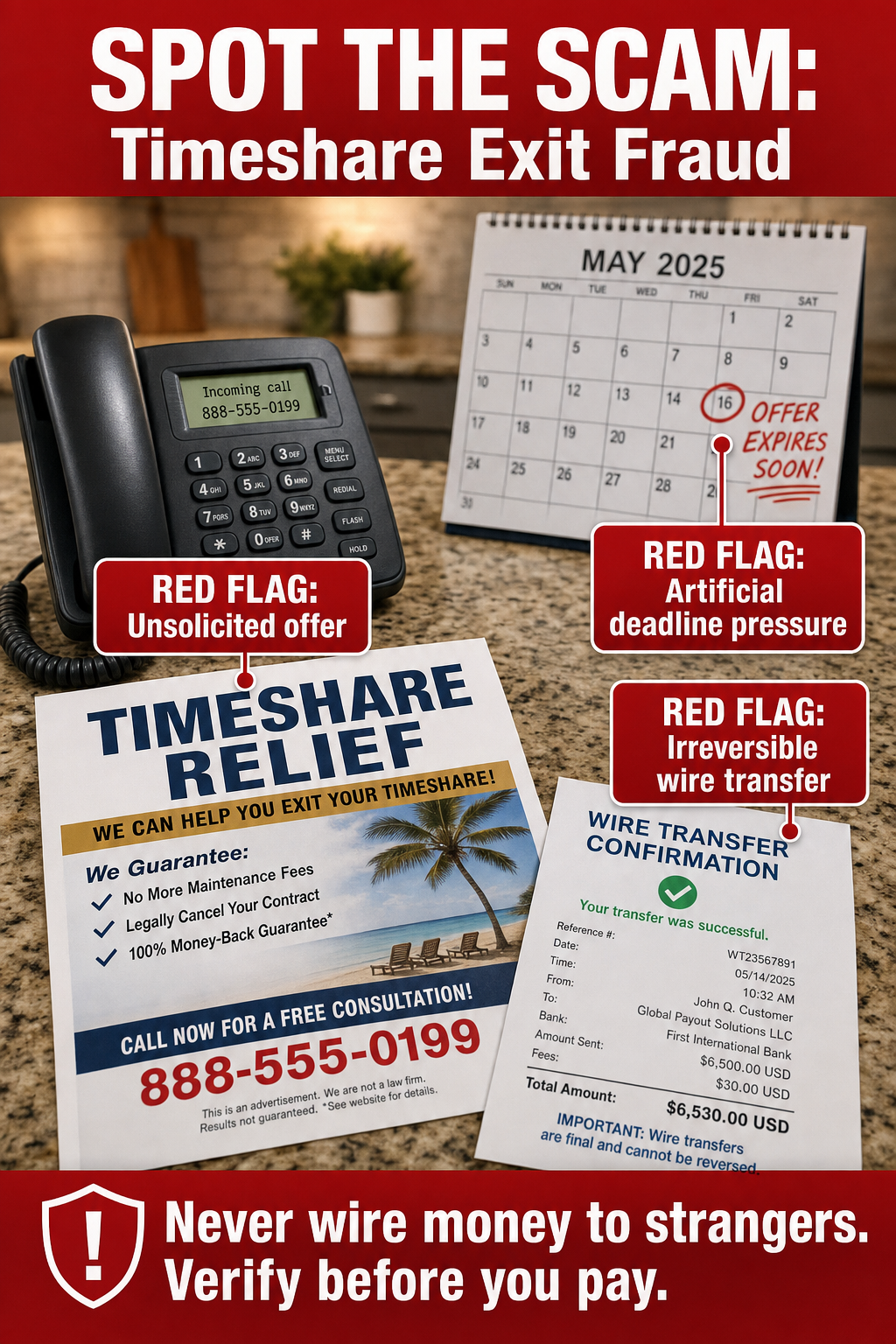
FBI Warns: Cartel-Linked Timeshare Exit Scams Have Stolen Nearly $300 Million From Owners Since 2019