Diamond Resorts Timeshare Trap: A Las Vegas Couple's $1,500-a-Month Warning to Every Owner
Diamond Resorts Timeshare Trap: A Las Vegas Couple's $1,500-a-Month Warning to Every Owner

Vacation ownership sales pitches sound simple: pay once, vacation forever. But for one Las Vegas couple, that promise turned into a decades-long financial spiral — and their story is a cautionary tale every timeshare owner considering an exit should understand.
What Happened to the Las Vegas Couple's Diamond Resorts Contract?
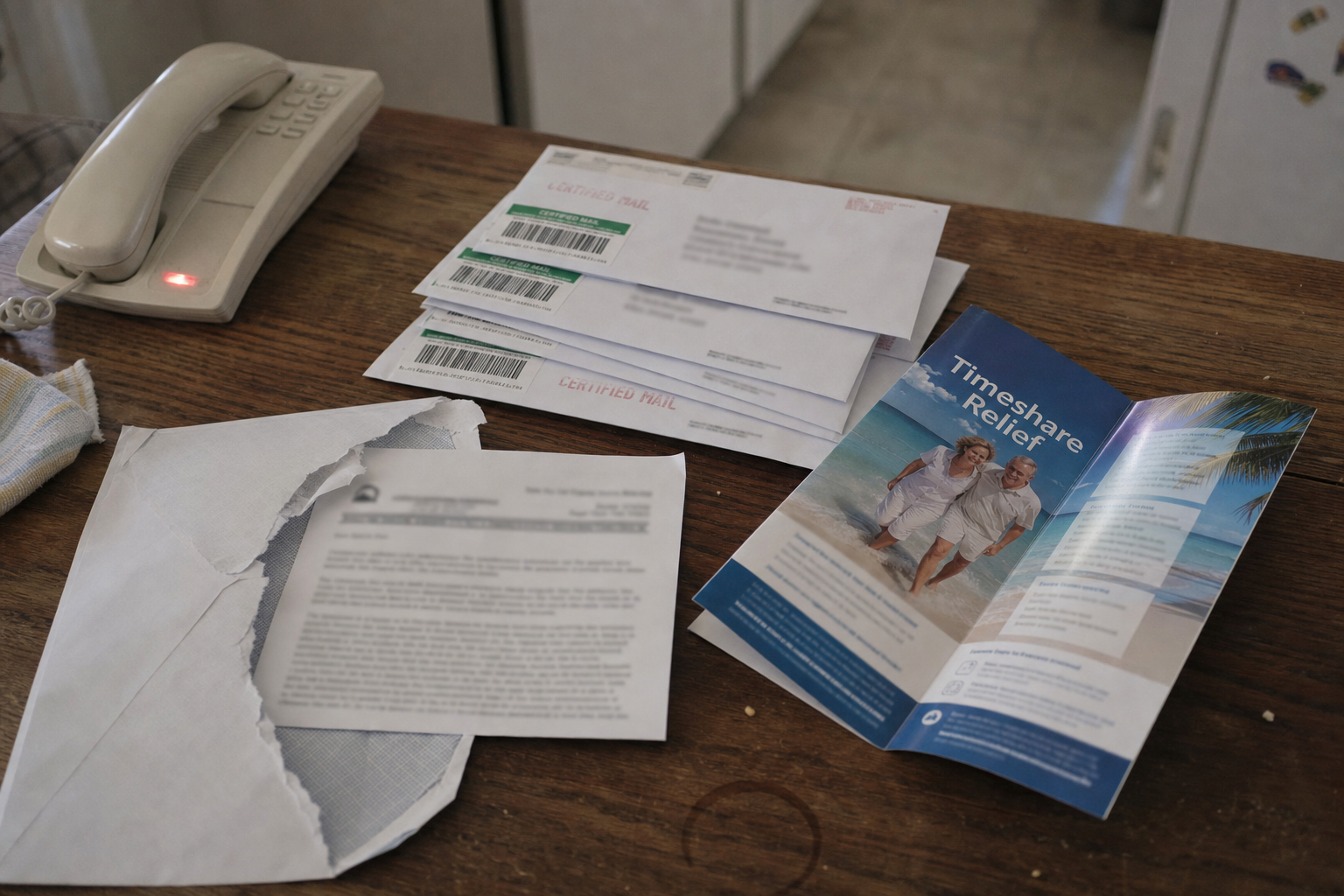
In 1998, a Las Vegas couple signed what they believed was a straightforward timeshare agreement. Over the next two decades, repeated "upgrade" pitches — pushed with classic high-pressure sales tactics — gradually escalated their commitment. By 2021, they'd been talked into a larger Diamond Resorts package under the belief that loyalty points could offset their maintenance fees. That belief turned out to be false. Their monthly payments climbed past $1,500 a month, and an independent appraisal later showed the "investment" was worth roughly $2,000 — a fraction of what they'd put in. The story was first reported locally by 8 News Now Las Vegas, and after media attention, Hilton Grand Vacations — which acquired Diamond Resorts in 2021 — agreed to refund the couple and cancel their contract.
Is Diamond Resorts the Only Company With This History?
No — and that's the point. Diamond Resorts has faced regulatory scrutiny well beyond this one case. In 2016, the Arizona Attorney General's office reached an $800,000 settlement with Diamond Resorts over deceptive sales practice complaints. Since then, Diamond and its parent company Hilton Grand Vacations have also gone on offense themselves, winning a federal court ruling against third-party exit companies accused of false advertising — a reminder that the exit industry has its own bad actors, which is exactly why choosing a legitimate, transparent partner for a timeshare exit matters as much as recognizing a bad sales pitch in the first place.
Could This Couple Have Avoided It With a Rescission Notice?
Possibly — if they'd caught the problem inside their state's rescission window. Every U.S. state grants timeshare buyers a short, non-waivable "cooling-off" period — typically 3 to 15 calendar days — during which a contract can be canceled for any reason with a full refund. The length depends on where the resort is located, not where the buyer lives: Nevada allows 5 days, Florida allows 10, and California allows 7. The clock usually starts on the signing date or when required disclosure documents are received, whichever comes later. For timeshares marketed across state lines, the federal Interstate Land Sales Full Disclosure Act adds a separate 7-day window tied to receipt of a property report.
The catch: rescission only works if you act before the window closes, and it must be done in writing — sent by certified mail to the exact address specified in the contract. Phone calls, emails, and verbal notice don't count in any state. Once that window passes — as it long since had for the Bediamols by the time their upgrade problems surfaced — rescission is off the table, and owners have to pursue other exit paths, which is exactly where most timeshare owners find themselves today.
Red Flags That Signal a Timeshare Upgrade Is a Bad Deal
Looking back, several warning signs appeared well before the final upgrade pitch. If any of these sound familiar, treat them as a signal to slow down, not sign:
- Urgency framing. "This offer is only good today" or "the price goes up tomorrow" is a pressure tactic, not a genuine market constraint.
- Vague point-value promises. Sales reps describing points as flexible "currency" that can cover maintenance fees, without a written breakdown of exactly how many points equal what, is a common misrepresentation.
- Meeting length as a tactic. Presentations that run for hours, with breaks designed to wear down resistance, are a documented sales pattern in the industry — not a coincidence.
- "Your heirs are automatically covered" claims. Timeshare obligations often pass to heirs by default, contrary to what some sales reps imply; verify this in writing, not verbally.
- No independent appraisal offered. Legitimate upgrades should hold up to third-party valuation. If a rep discourages you from getting one, that's a red flag itself.
What Should This Teach Prospective and Current Timeshare Owners?
A few hard lessons stand out from this couple's experience, and they apply just as much to anyone considering a first purchase as to a long-time owner facing an upgrade pitch:
- Verbal promises aren't contract terms. Sales reps can say almost anything in the room; only the signed document is enforceable. Read every clause before signing, especially anything involving points, maintenance fees, or "loyalty" credits.
- High-pressure tactics are a warning sign, not a bonus. Phrases designed to create urgency or emotional guilt are sales tools, not facts about the product.
- Points systems are often more restrictive than advertised. Verify — in writing — exactly how points can and can't be applied before agreeing to any upgrade.
- Regulatory and consumer protection resources exist. The Federal Trade Commission and state consumer affairs divisions publish guidance and accept complaints about deceptive timeshare sales practices.
Legitimate Exit Help vs. Timeshare Exit Scams: How to Tell the Difference
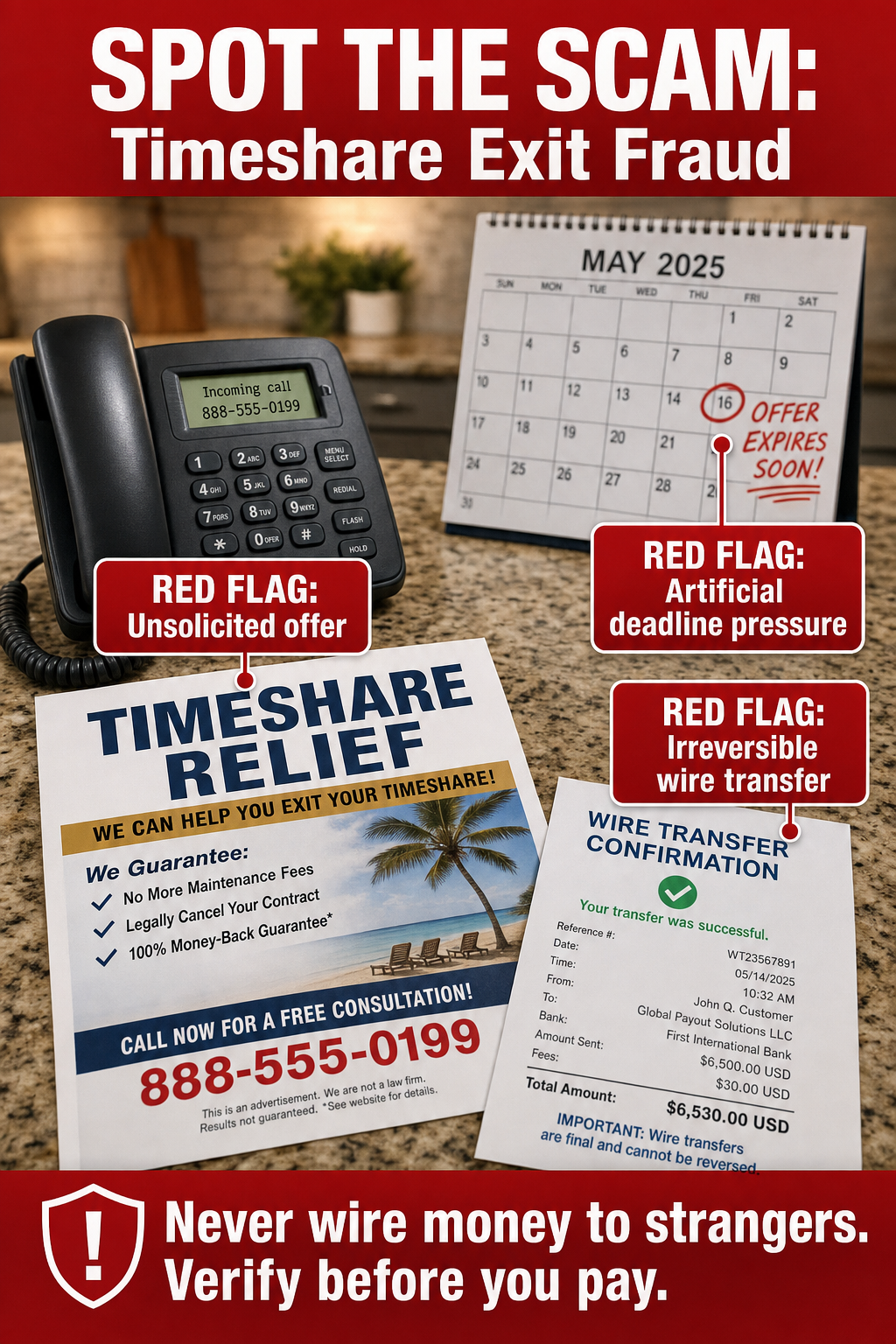
Once the rescission window is closed, owners looking for a way out often encounter two very different categories of help — and confusing them is costly. A legitimate exit process is transparent about timeline, fee structure, and what it can and can't guarantee; it never advises an owner to simply stop paying maintenance fees and let the account go to collections, since that route damages credit and can trigger tax consequences. By contrast, the practices federal courts have flagged as deceptive typically involve large upfront fees — sometimes exceeding tens of thousands of dollars — paid before any service is delivered, combined with vague claims about "legal loopholes" that don't hold up to scrutiny. Before working with any exit company, verify its complaint history with your state Attorney General's consumer protection division and confirm exactly what "cancellation" means in writing — a negotiated release is very different from advice to breach a contract.
What If You're Already Past the Rescission Window?
If your contract has quietly grown into something you never agreed to — bigger payments, unusable points, or a "value" far below what you've paid — you're not alone, and you're not without options. Understanding exactly what you own — deeded week versus points package — is the starting point for any real exit strategy, since it determines which paths are actually available to you and how a legitimate release needs to be structured.
Frequently Asked Questions
Can a timeshare company really refund a contract after years of payments?
It happens, though usually only after significant pressure — media attention, legal action, or regulatory involvement. It's not the norm, which is why proactive exit planning matters more than hoping for a goodwill refund.
How long is the rescission period for a timeshare purchase?
It varies by state and is tied to the resort's location, not the buyer's home state — generally 3 to 15 calendar days, and it must be exercised in writing, not by phone or email.
Are all timeshare exit companies legitimate?
No. Federal courts have found that some exit companies engage in false advertising and charge large upfront fees without delivering results. Vet any exit company's track record, complaint history, and fee structure before paying anything.
Does upgrading a timeshare ever make financial sense?
Rarely. Upgrades are typically new sales pitches disguised as account improvements. Independent appraisal of the actual resale or point value — not the salesperson's framing — is the only reliable gauge.
Do timeshare obligations really pass to my heirs?
In many cases, yes — timeshare contracts are often perpetual, meaning the obligation can continue for family members after the original owner's death unless the contract is exited beforehand. This is worth confirming directly with your resort's contract terms.
Ready to Get Out of a Timeshare That No Longer Works for You?
You don't have to navigate a confusing contract, an unresponsive resort, or a pushy upgrade pitch on your own. Call AxeMyTimeshare at (949) 731-6607 for a free consultation, or visit axemytimeshare.com to see if you qualify for a structured exit.





FBI Warns: Cartel-Linked Timeshare Exit Scams Have Stolen Nearly $300 Million From Owners Since 2019