Timeshare Sales Tactics Exposed: Marriott, Wyndham & More — What a Former Salesman's Tell-All Reveals
Timeshare Sales Tactics Exposed: Marriott, Wyndham & More — What a Former Salesman's Tell-All Reveals
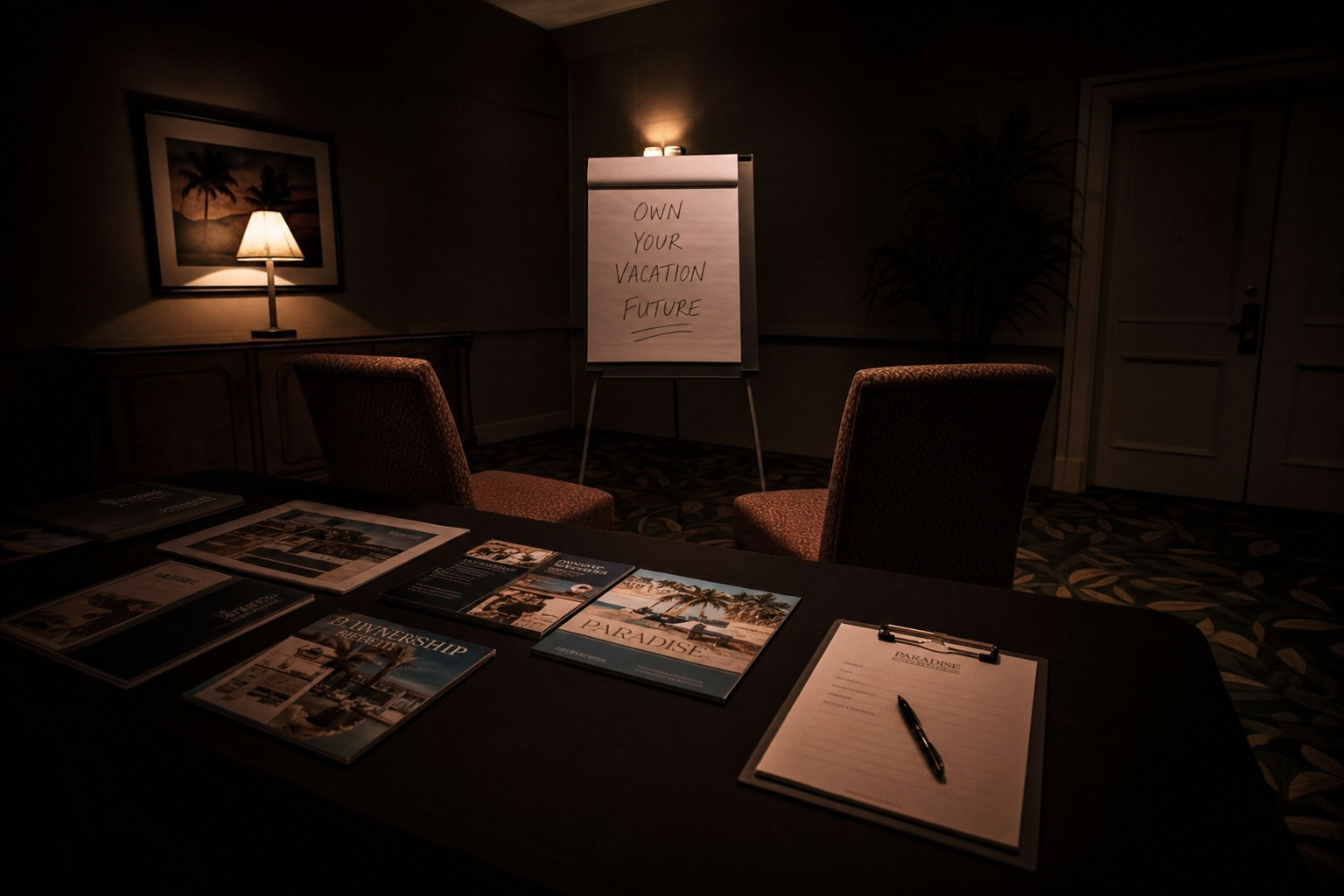
If you've ever walked out of a timeshare presentation feeling like you'd been through something closer to an interrogation than a sales meeting, you weren't imagining it. Understanding the sales tactics behind a timeshare purchase is often the first step toward a real timeshare exit later on. Rick Pons, a former timeshare salesperson who spent years working the industry starting in Cancún, Mexico in 2003, wrote a book about exactly what happens behind the scenes — and it confirms nearly everything owners have suspected but couldn't prove.
Who Is Rick Pons, and Why Does His Account Matter?
Pons spent his early career in a highly competitive resort market, initially working in marketing roles designed to get couples into the sales room. His book, titled Lying For A Living, is a firsthand, insider account of a hard-sell timeshare operation — not a consumer advocate's outside guess at what happens, but a description from someone who worked the system. That distinction matters: most warnings about timeshare sales pressure come from owners after the fact, the same way our recent look at a Las Vegas couple's Diamond Resorts ordeal did. Pons' account comes from the other side of the table.
How Does a Hard-Sell Timeshare Operation Actually Work?
According to Pons, the process runs through a defined chain of roles, each with a specific job in moving a prospective buyer toward signing:
- The "liner" — the first point of contact, whose job is to build rapport over breakfast or a property tour while quietly gathering personal and financial information.
- The handoff — that information gets passed up the chain to prepare the next salesperson for a targeted pitch.
- The "closer" — the most aggressive role, tasked with using every available tactic to convert the lead into a signed contract.
This isn't a rogue-employee problem. It's a structured system built on fractional ownership sales, and understanding the structure is exactly what helps owners recognize when they're inside one.
What Psychological Tactics Get Used in the Room?
Pons' account and independent research on the industry point to a consistent set of manipulation strategies used to wear down resistance:
- Pitting couples against each other. Salespeople identify whichever partner is more hesitant and target them individually, sometimes separating couples to apply pressure one-on-one.
- Reciprocity pressure. A free meal, show tickets, or a discounted stay taps into reciprocity — the well-documented psychological discomfort people feel when they sense they owe someone something — even though attendees have every right to leave with no purchase.
- Manufactured urgency. "This price is only good today" is a scripted tactic, not a real market constraint — a legitimate offer doesn't expire the moment you leave the room. It's the same sunk cost-adjacent pressure that later keeps owners paying for contracts they regret.
- False rental-income promises. Claims that the timeshare will "pay for itself" through rental income are rarely backed by real numbers and often don't hold up.
- Marathon sessions. Presentations advertised as 90 minutes frequently run three to five hours, a deliberate design to lower resistance through fatigue.
Why Do Companies Now Call Timeshares "Vacation Clubs"?
As public awareness of these tactics has grown, the word "timeshare" itself has picked up a negative reputation — so some companies have shifted their marketing language. Products are now frequently sold as "vacation clubs," "all-inclusive clubs," or "fractional ownership clubs." The rebrand doesn't change the underlying legal and financial structure; it's the same category of contract with a friendlier name, which is worth knowing if you're evaluating any presentation that avoids the word "timeshare" entirely.
Which Major Timeshare Developers Use These Sales Tactics?
Pons' account describes an industry-wide sales model, not one bad actor — and it applies across nearly every major vacation ownership brand. Presentations following this same liner-to-closer structure are standard practice at Marriott Vacation Club, Hilton Grand Vacations, Wyndham Destinations, Bluegreen Vacations, Diamond Resorts, Disney Vacation Club, Westgate Resorts, and Hyatt Vacation Club sales centers alike. That's not an accusation against any single company — it's a reflection of how the entire timeshare sales industry trains and incentivizes its closers. If your contract is with any of these developers (or another major resort brand) and you're now facing rising maintenance fees, an unusable points balance, or a purchase you regret, the exit process differs by developer, but the underlying pressure tactics that got you there are almost always the same.
Do You Actually Have Legal Protection Against These Tactics?
Yes — and most people never use it. The Federal Trade Commission's Cooling-Off Rule gives buyers three business days to cancel certain sales made away from a seller's permanent place of business — including presentations held in hotel rooms, convention centers, or resort sales offices — for a full refund, no reason required. To use it, a written cancellation notice has to be postmarked within that window and sent by certified mail to the address specified in the contract; a phone call or email doesn't count. Many states layer additional, often longer, protections on top of this federal rule specifically for timeshare purchases. The problem, as Pons' account confirms, is that this right is frequently downplayed or buried in paperwork during the sale itself — which is exactly why knowing it exists, before you're in the room, matters.
What Should You Do If You're Already Feeling the Pressure Building?
If you're mid-presentation and recognizing these patterns as they happen, the most effective move is a firm, unapologetic "no" — you're under no obligation to buy simply because you accepted a free meal or gift, and reclaiming your ID or documents before the session ends prevents the meeting from being extended further than planned. If you've already signed and are now feeling the long-term financial reality of that decision, the path forward starts with understanding what you actually own — deeded week versus points-based contract — since that determines which legitimate exit paths apply to your situation.
Frequently Asked Questions
Is "Lying For A Living" based on a real timeshare sales career?
Yes. Rick Pons worked in the timeshare sales industry starting in Cancún in 2003, and his book is a firsthand account of the tactics used during his career.
Are all timeshare salespeople dishonest?
No — Pons himself acknowledges that some sales teams operate ethically. The concern is that the industry's incentive structure makes deceptive tactics common enough that buyers need to stay cautious regardless of who's presenting.
Why do some companies avoid the word "timeshare" in their marketing?
The term has developed a negative public reputation, so some companies market functionally identical products under names like "vacation club" or "fractional ownership club" to sidestep that stigma.
Do Marriott, Wyndham, and Hilton all use the same sales tactics?
The specific presentation format and incentives vary by developer, but the same core structure — a liner building rapport, information handed off to an aggressive closer, and manufactured urgency to sign the same day — is standard across nearly all major timeshare and vacation club brands.
How long do I have to cancel a timeshare contract after signing?
Under the FTC's Cooling-Off Rule, you generally have three business days to cancel in writing for a full refund if the sale happened away from the seller's permanent place of business — many states extend this further specifically for timeshares. Check your contract and state law for your exact window.
Can I leave a timeshare presentation before it's "over" without buying?
Yes. Attendees are under no legal or contractual obligation to stay for the full length of a presentation or to make a purchase in exchange for a free gift or meal.
Already Signed? Don't Wait for the Pressure to Get Worse.
If you sat through a pitch like the one Pons describes — at Marriott, Wyndham, Hilton, Diamond, Disney, or any other major developer — and walked out with a contract you regret, you're not alone, and you have real options for a timeshare exit even outside the cancellation window.
Call AxeMyTimeshare right now at (949) 731-6607 for a free, no-pressure consultation with someone who's on your side for once, or head to axemytimeshare.com to see if you qualify for a structured exit. The sooner you reach out, the more options you typically have.






FBI Warns: Cartel-Linked Timeshare Exit Scams Have Stolen Nearly $300 Million From Owners Since 2019