
Timeshare Special Assessment — The Hidden Fee That Pushes Owners Over the Edge
Timeshare Special Assessment — The Hidden Fee That Pushes Owners Over the Edge
By Marcus Reed, Senior Timeshare Contract Analyst | Axe My Timeshare
The short answer: A timeshare special assessment is an unexpected, one-time charge your resort can issue on top of your annual maintenance fees — for anything from hurricane repairs to lobby renovations. It isn't capped, it isn't optional, and it almost never appears in the sales pitch. For thousands of owners, it's the bill that finally makes staying in the contract cost more than getting out of it.
You survived the high-pressure sales presentation. You've been paying the maintenance fees — even as they crept up year after year. You've accepted that the resort is harder to book than they made it sound.
Then the envelope arrives.
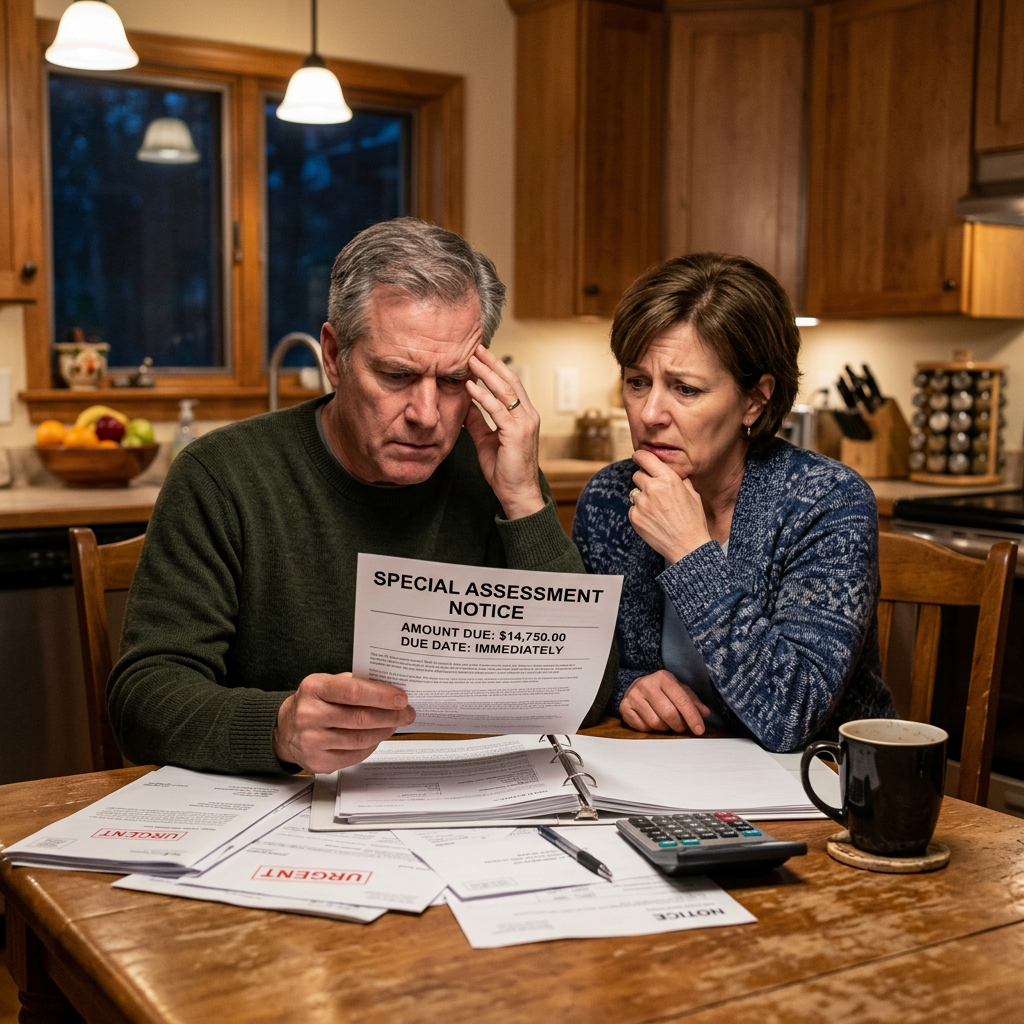
It's not the annual fee statement. It's something else: a Special Assessment Notice. An additional charge, due now, for a project you didn't vote on at a property you rarely visit.
For many timeshare owners, this is the moment everything clicks. Not just what a special assessment is — but what kind of financial trap they're actually in.
What Is a Timeshare Special Assessment Fee?
A timeshare special assessment is an additional charge imposed by a resort's homeowners association (HOA) or management company to cover expenses that fall outside the standard annual operating budget. Unlike your regular maintenance fee, which is predictable and billed annually, a special assessment is typically unannounced, unscheduled, and non-negotiable.
The money is used for large-scale needs: emergency structural repairs, major renovations, insurance gaps after natural disasters, or simply a reserve fund that wasn't managed properly. The resort determines the cost, divides it among all owners, and sends you a bill.
You either pay it — or lose access to the property. In many cases, if you don't pay, the association can place a lien on your timeshare and begin foreclosure proceedings.
Why Do Resorts Charge Special Assessments?
The honest answer is that many resorts don't plan well — or plan well for themselves at your expense.
Large resort properties built in the 1990s and 2000s are now aging. Roofs need replacing. HVAC systems fail. Pools and common areas require costly overhauls. Rather than absorbing those costs through properly managed reserve funds, developers frequently shift the burden onto owners through assessments. You're funding a capital improvement project on a property you may own one week of access to per year.
There's also the disaster scenario. Coastal timeshare properties in Florida, the Caribbean, and Hawaii have hit owners with assessments following hurricane damage that ran into the thousands per owner — charges that appeared months after the storm, with little warning.
And sometimes it's simpler than that: the resort wants to rebrand. Upgrade the spa. Install EV chargers in the parking lot. Add pickleball courts. That bill lands in your mailbox too.
How Much Can a Special Assessment Cost?
There is no cap. That's the part most owners don't realize until they're staring at the number.
Special assessments have ranged from a few hundred dollars to well over $10,000 per owner depending on the scope of the project and the size of the ownership pool. Wyndham Destinations, Marriott Vacations Worldwide, and Bluegreen Vacations have all issued assessments at various properties over the years, and the amounts are entirely at the discretion of the association board — which the developer typically controls.
Your original purchase contract almost certainly included language authorizing these charges. The phrase "special assessment" appeared somewhere in the fine print, but it wasn't a line item anyone highlighted during the sales presentation.
Is a Special Assessment the Same as a Maintenance Fee?
No — and the distinction matters.
Your annual maintenance fee covers routine operating expenses: housekeeping, utilities, basic repairs, and resort staffing. It goes up most years — the American Resort Development Association (ARDA) has tracked average maintenance fees rising from around $731 in 2010 to over $1,480 by 2024, a pace that consistently outpaces inflation.
A special assessment sits on top of that. It's a separate charge, usually a lump sum, for a specific project or unexpected cost. You can be paying your maintenance fees on time and still receive a special assessment notice. They are independent obligations, and the resort can pursue both simultaneously if either goes unpaid.
What Happens If You Don't Pay a Special Assessment?
Not paying triggers a process that's almost identical to what happens when you stop paying maintenance fees — and neither outcome is painless.
First, access to the property is suspended. Then collection notices begin. Depending on the terms of your ownership agreement and the state where the resort is located (Florida and Nevada have particularly aggressive enforcement frameworks), the association can record a lien against your timeshare. After that, foreclosure is on the table.
Foreclosure on a timeshare is different from foreclosure on a primary residence, but it still shows up on your credit report. Judgments can follow in states that allow deficiency claims after the foreclosure sale doesn't cover the outstanding balance.
If you're already thinking about what happens when you stop paying, our post on stopping timeshare maintenance fees walks through the exact sequence — month by month.
Can You Dispute or Refuse a Special Assessment?
Rarely, and almost never successfully.
The legal right to issue special assessments is embedded in your ownership documents — the declaration, the HOA bylaws, and your original purchase agreement. Timeshare attorneys can sometimes identify procedural violations (improper notice periods, votes that didn't meet quorum requirements) that open the door to challenging an assessment. But that's the exception, not the rule.
The Better Business Bureau (BBB) and state consumer protection offices receive timeshare-related complaints regularly, but neither agency has the authority to void a contractually authorized assessment. The Federal Trade Commission (FTC) handles deceptive practice claims — which is a higher bar than simply receiving a bill you didn't expect. If you believe you were misled during the original sale, the FTC's complaint portal at reportfraud.ftc.gov is the right starting point.
The more useful question is not whether you can fight the assessment. It's whether continuing to fight — paying fees, absorbing assessments, accepting the terms of a contract that keeps getting more expensive — makes financial sense compared to pursuing a legal exit.
Why Special Assessments Push Owners Toward Exit
For many timeshare owners, the special assessment is the breaking point — not because it's the worst thing that's happened, but because it makes the math undeniable.
You were already paying $1,500+ a year in maintenance fees. Add an assessment of $3,000 or $5,000 and suddenly you've spent more in a single year than many people pay for a week at a nice hotel. And the contract resets next year, with another annual fee already scheduled to arrive.
The emotional shift is real: owners who had rationalized staying in the contract — maybe we'll use it more, maybe we can rent it out — often recalibrate after an unexpected assessment. The question stops being "how do we use this more" and starts being "how do we get out of this legally."
If you've inherited a timeshare along with someone else's assessments and fees, the situation is even more urgent — our post on inherited timeshares covers exactly what you're walking into and what you can do.
What Are Your Actual Options After a Special Assessment?
Once you've received an assessment, the clock matters. Here's what owners typically explore:
1. Pay and reassess the contract. Painful, but it buys time to pursue a legal exit without adding collection pressure.
2. Request a payment plan. Some resorts will allow installment payments on assessments. It's worth asking. It doesn't solve the underlying problem, but it manages the immediate cash pressure.
3. Explore deedback programs. Some developers — particularly Wyndham and Marriott — have voluntary surrender programs. Eligibility is limited and waitlists are long, but it's a legitimate path for qualifying owners. Our full breakdown of how to exit a Wyndham, Marriott, or Bluegreen timeshare covers what these programs actually require.
4. Work with a legitimate timeshare exit company. A reputable exit company can pursue a legal release from the contract through negotiation, deed-in-lieu, or other structured methods. The key word is legitimate — the exit industry has its own scam problem. Our post on timeshare resale scams shows you how to tell the difference before you hand over any money. The FTC's guidance on timeshare resale scams is also worth bookmarking.
5. Pursue cancellation. If misrepresentation occurred during the original sale — promises that weren't kept, disclosures that weren't made — a formal timeshare cancellation may be possible. This is a legal process, not a simple form submission, and the outcome depends on the specifics of your contract and state law.
The Bottom Line
A timeshare special assessment is not a glitch in the system. It's the system working exactly as the resort designed it — collecting more money from owners who have limited options and no exit ramp built into their contract.
If you've just received one, you're not alone and you're not out of options. The assessment itself may be the clearest signal you've had that the cost of staying in this contract has permanently outpaced any value it provides.
A free consultation costs nothing and gives you a real picture of what exit looks like for your specific contract, resort, and situation.
Schedule Your Free Consultation →
Frequently Asked Questions
What is a timeshare special assessment fee? A timeshare special assessment is an unscheduled, one-time charge imposed by a resort's homeowners association to cover large expenses — such as major renovations, emergency repairs, or reserve fund shortfalls — that fall outside the standard annual maintenance fee budget.
Can a timeshare resort force you to pay a special assessment? Yes. The right to issue special assessments is typically written into your ownership documents and HOA bylaws. Failure to pay can result in suspension of resort access, a lien placed against your timeshare, and in some states, foreclosure proceedings.
How much can a timeshare special assessment cost? There is no legal cap. Assessments have ranged from a few hundred dollars to more than $10,000 per owner, depending on the project scope and how many owners share the cost. Wyndham, Marriott Vacations, and Bluegreen have all issued assessments at various properties.
Is a special assessment the same as a maintenance fee? No. Your annual maintenance fee covers routine operating costs. A special assessment is a separate, additional charge for a specific large-scale expense. Both can be owed simultaneously.
What happens if I don't pay a timeshare special assessment? Non-payment typically triggers access suspension, collection notices, a lien on your timeshare, and potential foreclosure depending on your state and ownership agreement terms.
Can a special assessment be a reason to pursue timeshare exit? Yes, and for many owners it's the deciding factor. When combined with annual maintenance fee increases, a special assessment can make the total annual cost of ownership higher than the market rate for equivalent vacation options — making legal exit the more financially sound decision.




FBI Warns: Cartel-Linked Timeshare Exit Scams Have Stolen Nearly $300 Million From Owners Since 2019