How to Cancel a Wyndham Timeshare Contract: Legal Exit Options, Ovation Program Limits, and What Actually Works
How to Cancel a Wyndham Timeshare Contract: Legal Exit Options, Ovation Program Limits, and What Actually Works

If you own a Wyndham Vacation Club timeshare — whether it's a points-based contract through Club Wyndham, a deeded week at a Wyndham-branded resort, or a WorldMark by Wyndham credit membership — you've probably already discovered that getting out is not as simple as calling Wyndham and asking them to take it back.
Travel + Leisure Co. (formerly Wyndham Destinations, formerly Wyndham Hotel Group) is the largest vacation ownership company in the world by points inventory. That scale comes with institutional resistance, contract complexity, and a customer service apparatus specifically designed to retain ownership — not release it. The result is millions of owners paying $900 to $1,400 per year in maintenance fees on a product they no longer use, can't book when they want it, and cannot sell.
This guide covers the three realistic exit pathways available to Wyndham owners in 2025 and 2026, what each one actually involves, the specific contract traps to watch for, and how to avoid the scams that target people in exactly this situation. If you're also weighing exits across multiple brands, our complete guide to getting out of a Wyndham, Marriott, or Bluegreen timeshare covers all three side by side.
Why Is It So Hard to Get Out of a Wyndham Timeshare Contract?
The short answer: Wyndham's contracts are designed for permanent ownership, not exit.
Unlike a standard real estate purchase, most Club Wyndham and WorldMark agreements contain perpetuity clauses — language stating that the ownership obligation continues "in perpetuity," with no natural expiration date. Many contracts go further, including inheritance provisions that transfer the financial obligation — the maintenance fees, the special assessments, the loan if one exists — directly to your heirs upon your death. You didn't just buy vacation time. You signed a lifetime contract with an estate tail.
The American Resort Development Association (ARDA), the timeshare industry's primary trade group, has lobbied extensively against state-level rescission expansion and exit-facilitation regulations, which is part of why the legal landscape for owners seeking exits has historically been so limited. That's shifting. The Federal Trade Commission (FTC) has issued updated guidance on timeshare exit scams, and several states — including Florida, Nevada, California, and Tennessee — have passed or strengthened consumer protection statutes specifically addressing timeshare sales practices and cancellation rights.
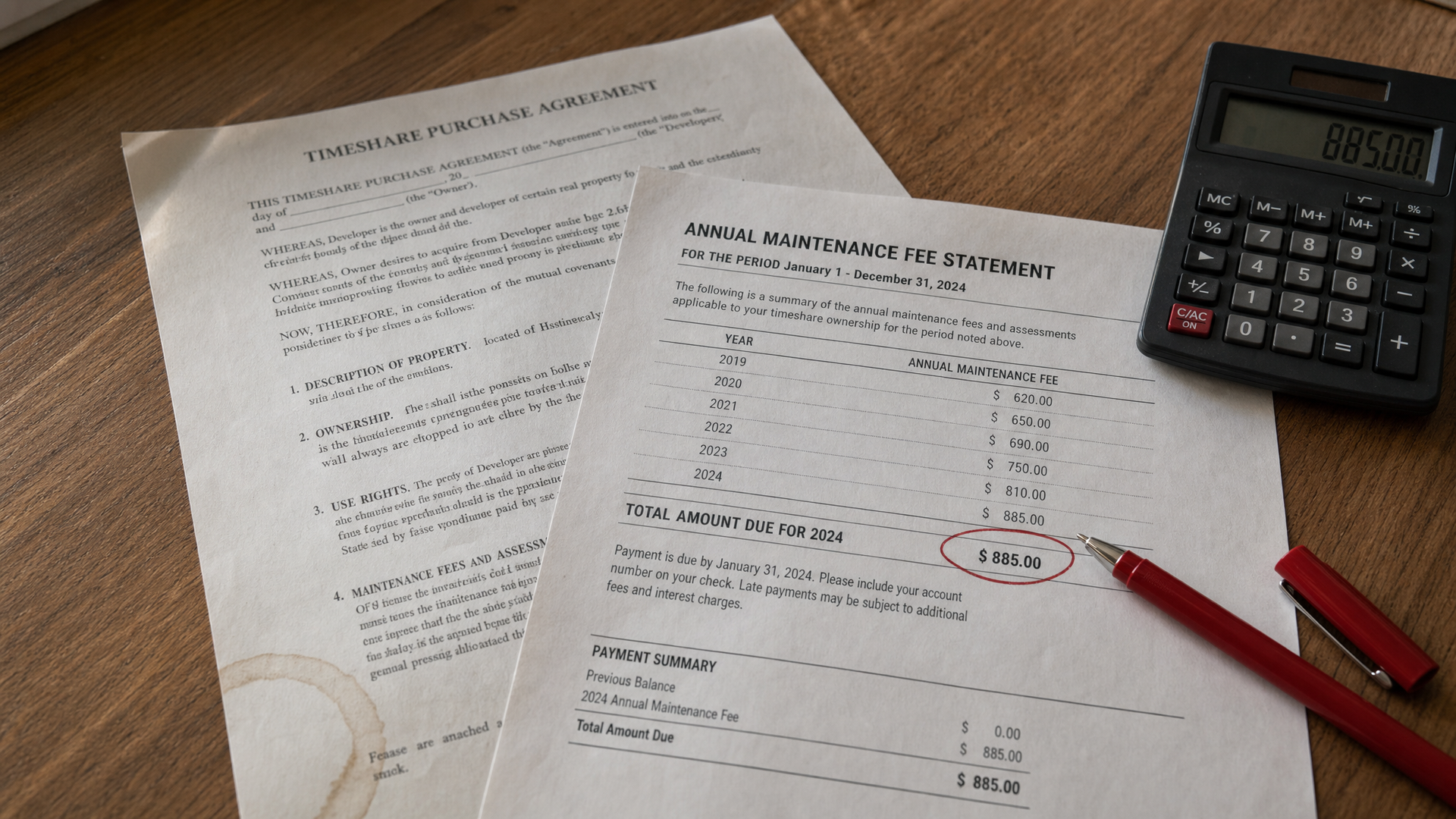
On the cost side: ARDA's own industry data puts the average annual maintenance fee at $1,120. For Wyndham specifically, fees commonly run between $900 and $1,400 depending on resort, points tier, and season. At an average 5% annual increase — which Wyndham's own historical fee patterns support — a $1,100 fee today becomes $1,793 in ten years and $2,920 in twenty. Over a 20-year horizon, the total cost to an owner who simply stays in the contract exceeds $38,000 in maintenance fees alone, before loan interest or special assessments.
None of that buys you guaranteed access to the resort you actually want during the week you actually want it.
What Are the Three Realistic Exit Pathways for Wyndham Owners?
There are three legitimate ways out of a Wyndham timeshare contract. Everything else — resale listings, donation schemes, transfer companies charging upfront fees — is either ineffective or a scam. Here's what the three real options look like.
Wyndham's Ovation Program (Internal Deed-Back)
Club Wyndham launched its Ovation by Wyndham program as an internal exit pathway for qualifying owners. On paper, it's the cleanest solution — you deed the timeshare back to Wyndham directly, avoiding any third-party involvement. In practice, Ovation has a short list of qualifications and a long list of exclusions.
To qualify for Ovation, your account must be:
- Fully paid off — no outstanding loan balance with Wyndham Financial Services or any third-party lender
- Current on maintenance fees — no delinquent balance, no collections activity
- At a participating resort — not all Wyndham resort properties are included in the Ovation portfolio at any given time
If you meet all three, Ovation is worth pursuing first. The process involves contacting Wyndham's owner services line, completing a deed-in-lieu of foreclosure agreement, and transferring the title back to Wyndham's entity of choice. There is no cash compensation. You receive nothing for the timeshare — but you also receive nothing further in obligations.
Where Ovation consistently falls short:
- Owners with any loan balance are typically ineligible, regardless of equity
- Wait times for Ovation processing have historically run 3–9 months
- Wyndham retains the right to decline any application without appeal
- "Participating resort" status changes without public notice
If you don't qualify for Ovation, the program is not a pathway — it's a wall.
Rescission (Only Available Within Days of Signing)
Every state with active timeshare sales legally requires a rescission period — a window after signing during which a buyer can cancel the contract without penalty and receive a full refund of any deposit. The Florida Vacation Plan and Timesharing Act mandates a 10-day window. Nevada Revised Statutes § 119A.410 provides 5 calendar days. California Business and Professions Code § 11238 provides 3 business days. Tennessee Code Annotated § 66-32-114 provides 10 days.
If you are reading this within days of signing a Wyndham contract, stop everything and execute the rescission now. It must be:
- In writing — email does not count in most states; a physical letter is required
- Sent via certified mail, return receipt requested — the postmark date is what matters legally, not the delivery date
- Addressed to the exact entity and address listed in your contract — not a general Wyndham customer service address
Do not call to rescind. Phone calls create no legal paper trail and are not accepted as valid rescission in any state.
If your rescission window has already closed — which is the case for the vast majority of people reading this — rescission is no longer an option. For a full breakdown of rescission alongside six other legal exit methods, our guide to 7 legal ways to get out of a timeshare covers each in detail.
Third-Party Timeshare Exit (The Primary Pathway for Long-Term Owners)
For most Wyndham owners — people who signed years ago, paid off the loan, and are simply locked into annual fee escalation with no viable resale market — the realistic exit path runs through a third-party timeshare exit company or timeshare attorney.
These exits work by analyzing the contract and sales transaction for legal vulnerabilities: maintenance fee projections that were materially misrepresented at the sales presentation, perpetuity clauses that weren't disclosed in plain language, high-pressure sales tactics that may constitute violations of state consumer protection statutes, changes to the points system that altered the value of what was purchased, or rescission window notices that weren't properly provided.
What separates a legitimate exit company from a scam:
- No upfront fee before contract review — legitimate companies evaluate your case before asking for payment
- A written agreement — scope of work, timeline, and contingencies should all be in writing before you pay anything
- No guarantee of a specific outcome — anyone promising "100% guaranteed exit" is either lying or planning to disappear with your money
- Transparency about the process — they should be able to explain in plain English which legal pathway they intend to pursue and why
Timelines for legitimate third-party exits typically range from 6 to 18 months depending on contract complexity, resort, and exit pathway.
What Specific Wyndham Contract Traps Should You Know About?
Wyndham's product history creates a few complications that don't apply to other brands.
Points Value Changes: Wyndham has adjusted point valuations, resort availability, and booking rules multiple times across the life of the Club Wyndham product. If the booking access or points value you were shown at the sales presentation no longer reflects current reality — which is true for a significant percentage of older contracts — that gap may constitute material misrepresentation. Document what you were told at the presentation. Notes, emails, any written materials from the sales agent matter here.
Club Wyndham Access vs. Deeded Ownership: Wyndham sells both deeded timeshare interests and non-deeded right-to-use contracts. The exit process differs significantly between the two. Non-deeded contracts are generally easier to exit because there's no title to unwind. Deeded contracts require a formal deed-in-lieu process or legal action to clear the record.
RCI Membership: Many Wyndham contracts include or were bundled with RCI (Resort Condominiums International) membership — the exchange network Wyndham acquired in 2005. If your contract includes RCI access, your exit agreement needs to address both the timeshare contract and the exchange membership, or the fee obligation may continue under the RCI agreement even after the underlying timeshare is canceled.
Loan Balance Through Wyndham Financial Services: Owners who financed through Wyndham Financial Services carry a separate obligation from the maintenance fee. Ovation won't accept contracts with an outstanding WFS loan. Third-party exits can sometimes work in parallel with resolving the loan, but sequencing matters and varies by case.
Should You Just Stop Paying Wyndham Maintenance Fees?
Stopping payment without a formal exit process underway is not a strategy — it's a credit event waiting to happen.
Wyndham will report the delinquency to Equifax, Experian, and TransUnion once the account is 30 days past due. After 60–90 days of non-payment, accounts are typically transferred to collections. After sustained non-payment, Wyndham may initiate foreclosure proceedings on deeded interests, which creates a public record and further credit damage.
The additional consequence: your account will be in default when you try to negotiate. Ovation won't touch a delinquent account. Third-party exit companies can sometimes still work with delinquent accounts, but leverage is reduced and timelines extend.
We've laid out the full picture — including the circumstances where stopping payment might factor into a deliberate exit strategy — in our post on what actually happens when you stop paying timeshare maintenance fees. If you're approaching non-payment territory, read that before making any decisions.
The general principle: start the exit process before you go delinquent, not after.
What About Selling or Donating a Wyndham Timeshare?
The secondary market for Wyndham timeshares is not a realistic exit pathway for the overwhelming majority of owners.
Club Wyndham and WorldMark credits are non-deeded and generally cannot be resold because there is no transferable deed.
Deeded Wyndham weeks do occasionally appear on resale platforms like RedWeek and eBay, but they typically sell for $1 to $0 after accounting for closing costs, transfer fees, and listing commissions. In many cases, you'll pay more to close the sale than you receive.
The more dangerous version of this problem is the timeshare resale scam — a company that contacts you proactively, claims to have a buyer ready, and charges upfront listing fees or transfer deposits before any sale occurs. The FTC has brought enforcement actions against dozens of these operations. They take the fee and disappear. The timeshare remains in your name.
Timeshare resale scams are one of the most consistent financial traps in this space — we've covered how they work, who runs them, and the warning signs in detail. If anyone has contacted you claiming to have a buyer for your Wyndham timeshare, read that before responding.
What Happens to a Wyndham Timeshare When You Die?
Most Wyndham contracts contain perpetuity clauses — language stating the ownership continues through the owner's lifetime and transfers to their estate. Depending on how the contract is written and how the ownership is structured (sole ownership, joint tenancy, tenancy in common), your heirs may inherit not just the timeshare but the entire outstanding maintenance fee obligation and any loan balance through Wyndham Financial Services.
Heirs have options — including the right to disclaim the inheritance within the timeframe set by state probate law — but those windows are short and the paperwork is specific. Once the estate accepts the asset, the obligation transfers fully.
If you have children or heirs you don't want to burden with this contract, that's an additional reason to pursue an exit while you're alive and in a position to manage the process. Our post on what to do if you've inherited a timeshare covers the heir-side experience in full — what your family is actually dealing with, and how they can refuse or exit an inherited contract.
What Documents Do You Need Before Starting a Wyndham Exit?
Gather these before contacting any exit company or attorney. Having them ready speeds up the review significantly and ensures you're not making decisions without a full picture of your obligations.
- Original purchase contract — all pages, including all addenda and exhibits
- Public offering statement (POS) — the disclosure document you received at closing; it contains the legal description of what you purchased and all fee disclosures
- Sales presentation notes — any written materials, brochures, or notes from the day you signed, including anything about maintenance fee projections or resort access
- Current maintenance fee statement — showing your current annual obligation and any outstanding balance
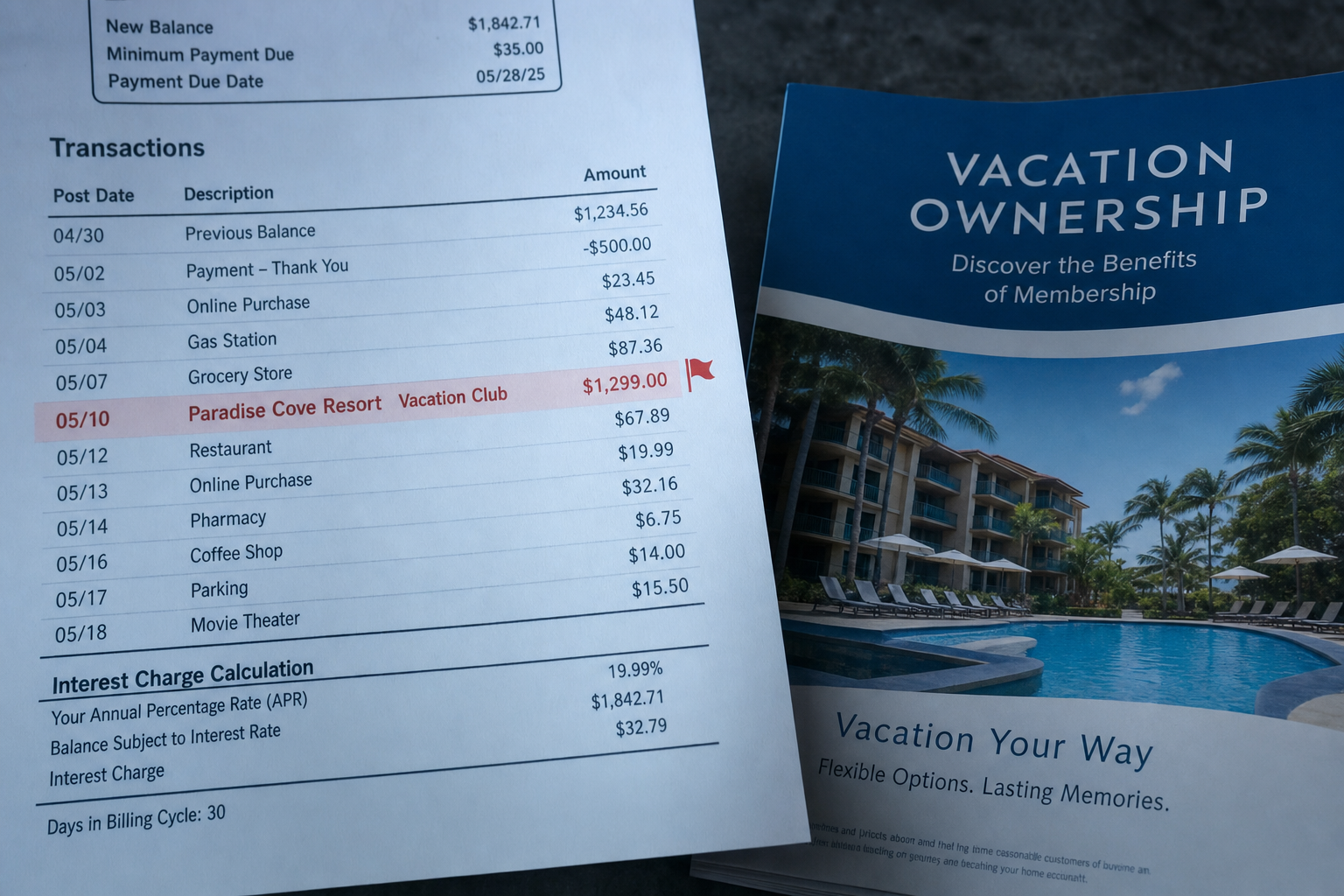
- Loan statement (if applicable) — from Wyndham Financial Services showing current principal, interest rate, and remaining term
- Any correspondence from Wyndham — fee increase notices, program change letters, collections notices, or anything related to the Ovation program
For a full walkthrough of how the cancellation process works from initial consultation to final confirmation, visit our timeshare cancellation explainer.
Ready to Find Out Where You Actually Stand?
Axe My Timeshare works with Wyndham owners across Club Wyndham, WorldMark, and older Wyndham Destinations contracts. Marcus Reed, our Senior Exit Advisor, reviews your situation — free, no obligation, no pressure — and gives you a straight answer about which exit pathway makes sense for your specific contract.
Most Wyndham owners who reach out haven't used their timeshare in years and are paying over $1,000 annually in fees with no end in sight. The free consultation takes two minutes to start.
See how the exit process works → · Start your free consultation →
Frequently Asked Questions: Wyndham Timeshare Exit
Can Wyndham legally force me to keep paying maintenance fees if I never use the timeshare? Yes. Club Wyndham and WorldMark contracts are legally binding regardless of usage. Non-payment triggers credit reporting at 30 days, collections at 60–90 days, and potential foreclosure on deeded interests. The maintenance fee obligation only ends through a formal exit that legally terminates the contract — not through non-use, hardship claims, or verbal communication with Wyndham customer service.
Does the Wyndham Ovation program actually work, and who qualifies? Ovation is a legitimate internal deed-back program that works for owners with fully paid-off contracts, no delinquent maintenance fees, and a property at a currently participating resort. Owners who don't meet all three criteria are typically ineligible. Third-party exit through a vetted company or timeshare attorney is the primary alternative for those who don't qualify.
How long does a Wyndham timeshare exit take from start to finish? Ovation deed-backs typically process in 3 to 9 months when accepted. Third-party exits involving negotiation or legal review typically range from 6 to 18 months depending on contract complexity, resort, and exit pathway. Rescission — available only within days of signing — resolves within the statutory window, typically within 30 days of the letter being received.
Will canceling a Wyndham timeshare damage my credit score? A properly executed exit through a legitimate process does not inherently damage credit. The credit risk comes from non-payment — Wyndham reports delinquencies to Equifax, Experian, and TransUnion at 30 days past due. Starting the exit process before going delinquent is the best way to protect your credit profile throughout the exit.
What is the difference between Club Wyndham and WorldMark by Wyndham, and does it affect my exit options? Club Wyndham is a points-based vacation ownership product sold primarily in the eastern United States and Caribbean. WorldMark by Wyndham is a credit-based membership system sold primarily in the western United States and Canada, historically associated with Trendwest Resorts (acquired by Cendant/Wyndham in 2002). Both are non-deeded point systems, but the underlying legal structure, fee calculation, and exit process have meaningful differences. WorldMark contracts may carry legacy terms from the Trendwest era that affect which exit pathways are available.
Can my children refuse to inherit a Wyndham timeshare when I die? Yes, but heirs must formally disclaim the inheritance within a narrow window — typically 9 months from the date of death under federal tax law, with state probate law adding additional deadlines. Heirs who accept the estate without formally disclaiming may be bound by the contract and maintenance fee obligation. Exiting the contract while alive is the cleaner solution.
Is the Wyndham timeshare resale market a realistic exit option? No, for most owners. Club Wyndham and WorldMark credits are non-deeded and cannot be transferred on the secondary market. Deeded Wyndham weeks occasionally sell on platforms like RedWeek or eBay, but closing costs and transfer fees typically exceed any sale proceeds. Any company contacting you proactively with a claimed buyer for your Wyndham timeshare should be treated as a potential scam until verified.